
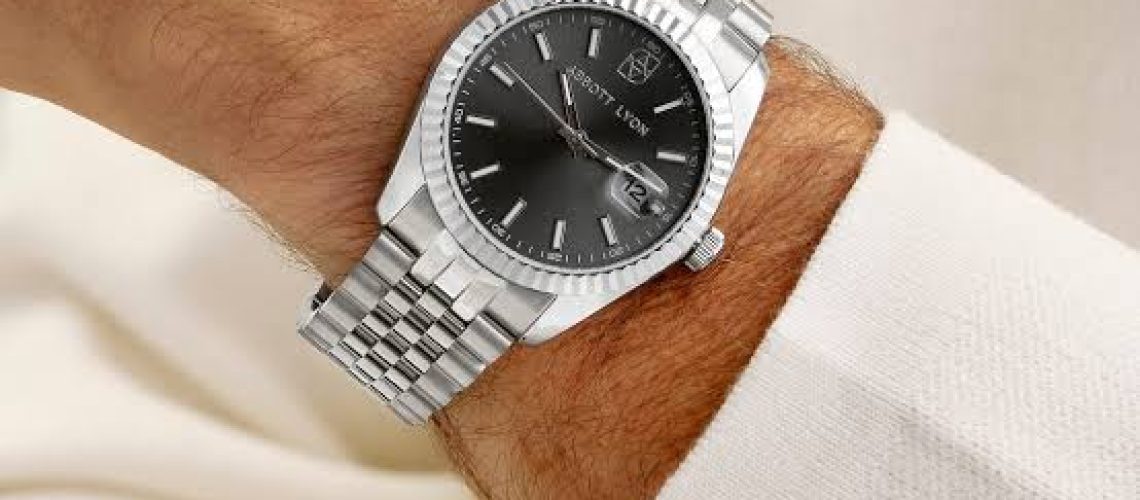

Some watches look dated almost as soon as they leave the showroom. Others remain desirable for decades, surviving changing tastes, new technologies, and countless shifts in the watch market. These enduring models are often described as “classics,” but what does that word actually mean?
A classic watch is not simply an old watch, an expensive watch, or a watch made by a famous brand. It is a design that continues to feel relevant long after its introduction. It usually has a recognizable identity, a practical purpose, historical significance, and enough versatility to appeal to multiple generations of collectors.
Watches such as the Rolex Submariner, Cartier Tank, Omega Speedmaster, and Jaeger-LeCoultre Reverso are considered classics for different reasons. They do not share the same shape, movement, or intended use. What they share is staying power.
Understanding what makes a watch a classic can help collectors look beyond trends and recognize the qualities that give certain watches lasting appeal.
What Is a Classic Watch?
A classic watch is a timepiece whose design, identity, and cultural relevance have endured over an extended period. It remains recognizable even as materials, movements, and manufacturing techniques evolve.
The word “classic” does not necessarily mean conservative. Some watches that are now considered classics were unconventional when they first appeared. The Audemars Piguet Royal Oak challenged traditional ideas about luxury watches by combining stainless steel, an integrated bracelet, and a bold industrial design. The Jaeger-LeCoultre Reverso introduced a case that could be flipped over to help protect the watch during polo matches.
What eventually made these watches classics was not immediate universal approval. It was their ability to remain distinctive and desirable over time.
A true classic normally possesses several of the following qualities:
- A recognizable and enduring design
- A strong connection to a particular function or era
- A consistent identity across multiple generations
- Cultural or historical significance
- Long-term collector interest
- Versatility that extends beyond a temporary fashion
- Influence on watches that followed
No single quality automatically creates a classic. It is usually the combination of design, history, usefulness, and continued relevance that gives a watch lasting status.
Timeless Watch Design
Design is one of the clearest elements separating a classic watch from a temporary trend.
A timeless watch does not need to be plain, but its elements usually work together in a balanced and intentional way. The case, dial, hands, bezel, bracelet, and proportions create a complete visual identity. Nothing feels included simply to follow the fashion of a particular moment.
Consider the Cartier Tank. Its rectangular case, Roman numerals, railroad-style minute track, and blue cabochon-style crown form a design language that is immediately recognizable. The watch has been produced in many sizes, metals, and configurations, yet its fundamental identity remains intact.
The Rolex Submariner offers another example. Its rotating timing bezel, highly legible dial, luminous hour markers, and Oyster case originated from the requirements of a professional dive watch. Those functional features eventually became some of the most recognizable elements in modern watch design.
A classic design can evolve without losing its identity. Cases may become larger, movements may improve, and bracelets may become more substantial. The essential design, however, remains recognizable.
That visual continuity matters. A collector should be able to place an older and newer version of a model next to each other and clearly see the relationship.
A Clear Purpose
Many classic watches began with a specific job to perform.
Dive watches were created to help monitor time underwater. Pilot’s watches emphasized immediate legibility. Chronographs measured elapsed time. GMT watches allowed travelers and aviation professionals to track more than one time zone. Dress watches provided a slim, refined option for formal settings.
A clear purpose gives a watch an authentic reason for its design.
The Omega Speedmaster, for example, began as a chronograph intended for timing. Its later association with NASA and crewed spaceflight added another layer to its history, but its design was already grounded in function. Its tachymeter bezel, chronograph layout, and readable dial were not arbitrary decorative choices.
Purpose does not have to involve an extreme environment. The Patek Philippe Calatrava is considered a classic because it represents a highly refined approach to the traditional round dress watch. Its purpose is different from that of a dive watch, but it is no less clear.
Function helps protect a design from becoming meaningless. When the appearance of a watch is connected to what it was created to do, its features tend to age more naturally.
A Distinctive Identity
Classic watches are usually identifiable without needing to see the name on the dial.
The octagonal bezel and exposed screws of the Audemars Piguet Royal Oak create an unmistakable profile. The reversible rectangular case defines the Jaeger-LeCoultre Reverso. The grooved bezel, integrated bracelet, and dial structure give the Patek Philippe Nautilus its identity. The crown-protecting bridge makes many Panerai Luminor models recognizable from across a room.
Distinctiveness does not require excessive decoration. It requires a coherent point of view.
This is one reason many technically impressive watches never become classics. A watch can contain an excellent movement and still lack a memorable external identity. If its design closely resembles numerous competing models, collectors may respect it without developing a lasting attachment to it.
A classic creates its own visual vocabulary. Other manufacturers may borrow from it, but the original remains recognizable.
Historical and Cultural Significance
History alone does not make a watch a classic, but meaningful history can strengthen its status.
Some watches become connected to major events, professions, public figures, films, sports, or cultural movements. These associations give collectors a story that extends beyond the physical object.
The Omega Speedmaster’s role in NASA’s crewed space missions is central to its identity. The Cartier Tank is connected to more than a century of changing fashion and design. The Rolex Datejust helped establish the familiar format of a practical, self-winding watch with a date display. The Casio G-Shock became an enduring symbol of toughness, accessibility, and functional digital design.
Cultural relevance is not limited to the most expensive segment of the market. A watch does not have to be made from gold or finished by hand to become a classic. It needs to represent something that continues to matter.
The strongest historical associations are documented and directly connected to the watch. Collectors should be cautious when a seller relies on vague claims, unsupported celebrity stories, or exaggerated descriptions of rarity.
Authentic history adds depth. Marketing language alone does not.
Consistency Across Generations
Most classic watches maintain continuity over time.
This does not mean that every version is identical. Movements improve. Water resistance may increase. Materials change. Case dimensions may be adjusted. Manufacturers introduce new dial colors and complications.
The important factor is whether the model preserves its central identity.
The Rolex Datejust has appeared in numerous metals, sizes, dial configurations, and bracelet combinations. Despite this variety, its basic formula remains familiar: a versatile automatic wristwatch with a date window and a strong connection to Rolex’s established design language.
Similarly, the Omega Speedmaster Professional has received technical updates without abandoning the overall appearance that made it recognizable.
This continuity creates a lineage. Collectors can debate which generation they prefer while still viewing each version as part of the same family.
Frequent, dramatic redesigns can make it more difficult for a model to establish that type of identity. If a watch changes direction every few years, the market may struggle to understand what the model represents.
Influence on the Watch Industry
A classic watch often influences the designs that follow it.
The Royal Oak helped establish the luxury stainless-steel sports watch as a serious category. The Submariner influenced generations of dive watches. The Tank became a reference point for rectangular dress watches. The G-Shock demonstrated the broad appeal of an extremely durable digital watch with a bold case.
Influence can be seen in case shapes, bracelets, dial layouts, bezel designs, and even the way brands position their products.
However, being widely copied does not automatically make a design a classic. The original watch must still possess a strong identity and continued relevance. When collectors can trace an entire category back to a particular model, that influence becomes evidence of the watch’s importance.
Longevity Versus Popularity
A popular watch is not automatically a classic.
Popularity measures current attention. Classic status requires endurance.
Certain watches become highly desirable because of social media exposure, limited availability, celebrity ownership, or rapid price appreciation. Those factors can create tremendous short-term demand, but they do not guarantee that collectors will care about the watch in 20 or 30 years.
A classic survives periods when it is not the market’s hottest model.
Its resale value may rise or fall. Its preferred size may move in or out of fashion. Certain references may become more collectible than others. Even so, the broader model remains respected.
This is why market price should not be treated as the only measure of classic status. A watch can be historically important and aesthetically enduring without being a record-setting investment. Conversely, a watch can experience a dramatic price increase without proving that it has lasting significance.
Time is the most demanding test.
Versatility and Wearability
Many classic watches are unusually adaptable.
A Rolex Datejust can work with casual clothing, office attire, or a suit. A Cartier Tank can feel formal on a leather strap but more relaxed in a smaller or simpler configuration. A stainless-steel sports watch can move between professional and recreational settings.
Versatility allows people to build real memories with a watch. A timepiece that can be worn regularly is more likely to become part of a collector’s life than one that only works in a narrow setting.
Wearability also includes proportions. Classic watches often achieve a visual balance that works on a range of wrists, even when the dimensions reflect the standards of their original era.
That does not mean every classic must be small or understated. Panerai built much of its modern identity around large, highly recognizable watches. The key is that the proportions support the character of the design rather than simply chasing a temporary preference for larger or smaller cases.
Craftsmanship and Mechanical Importance
Quality contributes to longevity, but a classic does not need the most complicated movement available.
Some classic watches contain movements admired for finishing and traditional construction. Others are respected for durability, accuracy, serviceability, or clever engineering. Quartz and digital watches can also achieve classic status when their design and cultural importance justify it.
Movement innovation can strengthen a watch’s historical position. A technically significant caliber may introduce a new complication, improve reliability, or represent an important development in watchmaking.
Still, technical specifications should be considered within the complete watch.
A complicated movement inside a forgettable design does not necessarily create a classic. Likewise, a relatively simple movement does not prevent a watch from becoming one. The movement, case, dial, history, and purpose must be viewed together.
Does Rarity Make a Watch a Classic?
Rarity and classic status are not the same thing.
A watch may be rare because few examples were produced, because production lasted for a short period, or because many examples did not survive. That rarity can make it collectible, but it does not guarantee broad historical importance.
Some of the greatest classics were produced in substantial numbers. Their status comes from their influence and lasting appeal rather than extreme scarcity.
Rarity matters most when it is combined with significance. A rare dial variation from an important model may be highly desirable because collectors already understand the larger story. A rare watch with little historical relevance, weak design, and almost no collector awareness may remain obscure.
Collectors should also distinguish between true production rarity and artificial scarcity created through limited-edition marketing.
The words “limited edition” do not automatically mean “future classic.”
Can a New Watch Be an Instant Classic?
The phrase “instant classic” is frequently used, but true classic status cannot be confirmed immediately.
A newly released watch may have the ingredients needed for long-term success. It may feature an original design, strong proportions, technical merit, and a clear connection to its brand. Collectors may reasonably predict that it will age well.
However, endurance cannot be demonstrated without time.
A watch needs an opportunity to survive changing trends and shifting collector preferences. It must remain meaningful after the excitement surrounding its release disappears.
It is more accurate to describe a new watch as having classic potential. Whether that potential becomes reality depends on how the watch is received, worn, remembered, and interpreted over the following years.
Vintage Does Not Automatically Mean Classic
Age is another quality that is often confused with classic status.
Every vintage watch is old enough to represent an earlier period, but not every vintage watch is historically significant, influential, or desirable. Many older watches were ordinary products with generic designs. Others may be interesting today because of their condition, unusual dial, or family history without being recognized as universal classics.
This does not make them unworthy of collecting.
A watch can be personally meaningful without being an industry icon. In fact, some of the most satisfying collections include overlooked watches that reflect the owner’s interests rather than a standard list of famous models.
“Vintage” describes age. “Classic” describes enduring importance and appeal.
How to Identify a Potential Classic Watch
No formula can predict the future with certainty, but collectors can ask several useful questions:
- Is the design immediately recognizable?
- Does the watch have a clear purpose or identity?
- Is it connected to a meaningful chapter in watchmaking history?
- Has the design remained consistent across different generations?
- Has it influenced other watches?
- Does it remain wearable outside one temporary trend?
- Is collector interest based on the watch itself rather than only its resale price?
- Would the watch still be interesting if its market value stopped increasing?
That final question is particularly important.
If the entire argument for a watch depends on future appreciation, the collector may be responding to speculation rather than lasting design. A classic should offer something beyond the possibility of profit.
Classic Watches and Personal Taste
Collectors do not need to like every recognized classic.
Someone may respect the historical importance of the Rolex Submariner while preferring the design of a less famous dive watch. Another collector may admire the Royal Oak’s influence without enjoying integrated-bracelet watches. Historical importance and personal taste are separate judgments.
The word “classic” also exists at different levels.
Some watches are universal classics within the entire industry. Others are classics within a particular brand, complication, design movement, or collector community. A model can be extremely important to enthusiasts of Japanese watches, military watches, independent watchmaking, or digital watches without having the same recognition among the general public.
A strong collection does not need to consist entirely of established icons. The best collections usually reflect a consistent point of view.
Should You Buy a Classic Watch?
A classic watch can be a strong choice for someone who values established design, history, and long-term wearability. Its identity is already understood, and there is usually a larger base of information available regarding references, movements, service considerations, and market behavior.
However, classic status does not guarantee that every example is a good purchase.
Condition, originality, provenance, service history, completeness, and price still matter. Two examples of the same classic model can offer very different ownership experiences. This is especially true with vintage watches, where replaced parts, refinished dials, heavy polishing, corrosion, or movement damage can significantly affect desirability.
Buy the specific watch, not only the model name.
A respected reference in poor condition may be less appealing than a carefully preserved example of a less famous watch. A knowledgeable dealer should be able to explain both the significance of the model and the condition of the individual piece being offered.
Final Thoughts: What Truly Makes a Watch a Classic?
A classic watch earns its status through endurance.
It has a design people continue to recognize, a purpose that gives its features meaning, and an identity strong enough to survive changes in fashion. History, innovation, cultural relevance, craftsmanship, and versatility may all contribute, but none of them works alone.
Price does not create a classic. Rarity does not create a classic. Age does not create a classic. Marketing certainly does not create one overnight.
Time does.
The greatest classic watches remain relevant because they offer more than novelty. They represent a clear idea executed with enough conviction to matter decades later. Whether that idea takes the form of a rectangular dress watch, a professional dive watch, a space-tested chronograph, or a durable digital tool, the principle is the same.
A classic does not need to remain unchanged. It simply needs to evolve without forgetting what made it important in the first place.