
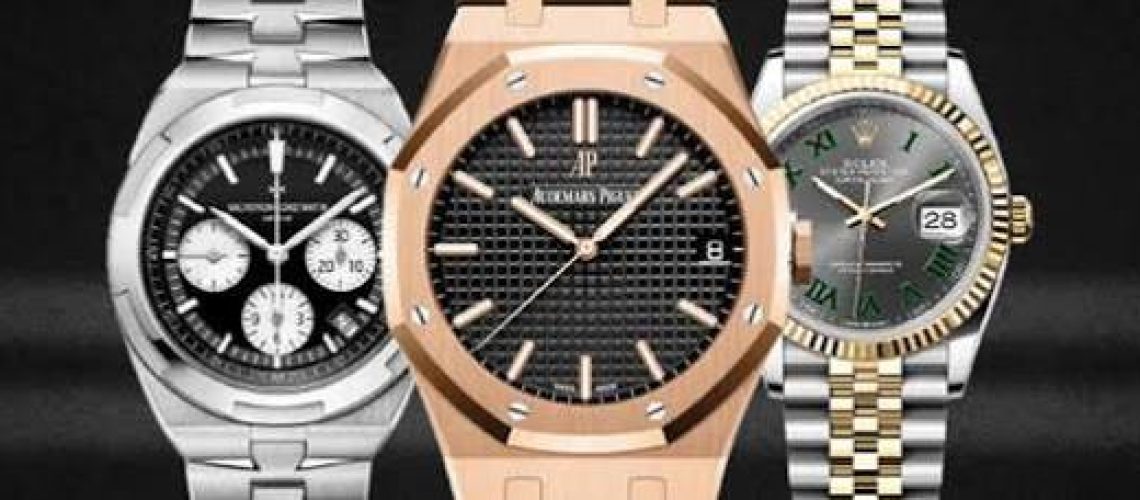

Understanding watch dealer pricing, market value, condition, profit margins, and why the cheapest luxury watch isn’t always the best deal.
Estimated Reading Time: 11–13 minutes
Imagine you’re shopping for a pre-owned Rolex Submariner.
You’ve done your research, narrowed down the reference you want, and started comparing listings from reputable watch dealers. Within a few minutes, you find two examples of what appears to be the exact same watch.
One dealer is asking $9,500.
Another is asking $12,000.
Same brand. Same reference. Same approximate production period. Both advertised as being in excellent condition.
Yet there’s a $2,500 difference between them.
Naturally, your first question is probably whether the more expensive dealer is simply overcharging.
Sometimes, the answer is yes. But more often than many collectors realize, the explanation is considerably more complicated.
The luxury watch market doesn’t operate with a single universally accepted price for every watch. Unlike buying a new television or another standardized consumer product, purchasing a pre-owned luxury watch involves evaluating an individual object with its own condition, history, configuration, and potential mechanical needs.
Two watches can share the same reference number while representing very different purchases.
And even when two dealers are offering nearly identical examples, their pricing can still differ dramatically.
Understanding why requires looking beyond the advertised price and examining how the watch business actually works.
1. The Same Reference Number Doesn’t Mean the Same Watch
One of the most common mistakes collectors make is assuming that two watches with identical reference numbers should command identical prices.
A reference number identifies a particular watch model or configuration, but it doesn’t necessarily tell you everything about the individual example being sold.
Consider two Rolex Datejust watches with the same reference number.
One might have spent most of its life carefully stored, with minimal polishing, an original dial, and a bracelet showing relatively little wear.
The other might have been worn daily for decades, polished repeatedly, and fitted with replacement components during previous servicing.
Both watches may be authentic.
Both may function properly.
Both may even look relatively similar in online photographs.
But their desirability to a knowledgeable collector can be substantially different.
The differences become especially important when evaluating vintage watches.
Collectors may pay premiums for original dial finishes, well-preserved cases, correct period components, and desirable variations that aren’t immediately obvious to casual buyers.
A vintage Rolex Submariner with a well-preserved original dial may command significantly more than an otherwise comparable example with a refinished dial.
The same principle applies to vintage Omega, Tudor, Cartier, Patek Philippe, and countless other manufacturers.
This is why comparing watches based solely on reference numbers can be misleading.
You’re not just buying a model. You’re buying a specific example of that model.
Before assuming one dealer is overpriced, make sure the two watches are genuinely comparable.
2. Condition Is Subjective, and Dealers Don’t Always Agree
Walk into five watch dealerships and ask each one to define excellent condition.
You’ll probably receive five slightly different answers.
Unlike the standardized grading systems used for certain collectibles, the pre-owned luxury watch market doesn’t have one universally adopted numerical condition scale.
One dealer might describe a watch with visible scratches as excellent because the case remains sharp and the watch hasn’t been excessively polished.
Another dealer might classify the same watch as very good because of those scratches.
A third might polish the watch before listing it and advertise it as being in excellent cosmetic condition.
None of these descriptions necessarily tells you everything you need to know.
Polished Versus Unpolished Watches
Polishing is one of the most misunderstood aspects of pre-owned watch pricing.
For some buyers, a freshly polished watch is more appealing because it looks cleaner and newer.
For others, particularly vintage collectors, preserving the original case geometry is more important than removing scratches.
Every polishing job removes some amount of material.
When performed carefully, polishing can improve the appearance of a watch without dramatically altering its shape. However, repeated or aggressive polishing can soften case edges, change lug profiles, and reduce the definition of original finishing.
On certain collectible vintage references, those changes can meaningfully affect value.
Imagine two vintage watches:
- Watch A: Original case finishing, visible scratches, strong lug profiles, and limited evidence of polishing.
- Watch B: Brightly polished case, fewer visible scratches, but noticeably softened edges.
A casual buyer might prefer Watch B.
An experienced vintage collector might be willing to pay considerably more for Watch A.
Neither preference is inherently unreasonable. They’re simply prioritizing different characteristics.
This is why condition should be evaluated through detailed photographs, specific questions, and, when practical, an in-person inspection.
A dealer’s condition description is a starting point, not a substitute for your own evaluation.
3. Service History Can Account for a Significant Price Difference
Mechanical watches require maintenance, and maintenance can be expensive.
When purchasing a pre-owned luxury watch, one of the most important questions is whether the movement has been serviced and what work was performed.
Consider two otherwise similar watches.
The first has documentation showing a recent service performed by a qualified watchmaker.
The second has no documented service history.
Even if both are currently running, they don’t necessarily represent the same ownership proposition.
The watch without service documentation may operate perfectly for years.
It might also require maintenance shortly after purchase.
A mechanical watch can appear to run reasonably well while still having dried lubricants, worn components, or other issues that aren’t visible from the outside.
What Does a Watch Service Actually Include?
The scope of service depends on the movement, its condition, and the service provider.
A comprehensive mechanical movement service typically involves disassembly, cleaning, inspection, lubrication, reassembly, and regulation. Worn or damaged components may need replacement.
Additional work may include gasket replacement, water-resistance testing, case refinishing, or repairs to the winding and setting mechanisms.
Not every service includes every procedure, and a basic timing adjustment should not be confused with a complete overhaul.
A recent service can therefore add value, but the documentation matters.
Ask whether the service was performed by the manufacturer, an independent watchmaker, or the dealer’s own service department.
Also ask what was actually done.
A receipt documenting a complete movement overhaul provides different information than a statement saying the watch was inspected and is running well.
The Risk of Deferred Maintenance
Let’s say Dealer A offers a watch for $7,000 without a documented service history.
Dealer B offers a comparable example for $8,000 with recent service documentation.
The $1,000 difference might initially seem excessive.
But if the less expensive watch requires a major service shortly after purchase, some or all of those savings could disappear.
That doesn’t automatically make Dealer B the better choice. The quality and relevance of the service, the watch’s condition, and the asking price still matter.
However, it illustrates an important principle.
The purchase price and the total cost of ownership are not always the same thing.
For more information about ongoing expenses, see our guide to the Tailored Timepieces website and explore our educational articles on watch ownership and maintenance.
4. Every Dealer Has a Different Cost Basis
This is where things become especially interesting.
Even when two dealers possess nearly identical watches, they may have paid dramatically different amounts to acquire them.
One dealer might have purchased a watch directly from a private collector several months earlier.
Another might have acquired the same reference from a fellow dealer at a higher wholesale price.
A third might have accepted the watch as part of a trade involving several other timepieces.
These acquisition methods can produce very different cost bases.
For example, imagine the following hypothetical situation:
| Dealer A | Dealer B | |
| Acquisition cost | $7,000 | $8,500 |
| Preparation and servicing | $300 | $400 |
| Total direct cost | $7,300 | $8,900 |
| Asking price | $9,000 | $10,500 |
| Gross spread before other expenses | $1,700 | $1,600 |
Dealer B is asking $1,500 more, yet the hypothetical gross spread is actually $100 smaller.
This example doesn’t include payment processing, marketplace fees, insurance, shipping, operating expenses, or other costs.
The point is that a higher asking price doesn’t automatically mean a dealer is making more money.
Why Acquisition Timing Matters
Luxury watch prices fluctuate.
A dealer who purchased a watch during a stronger market may have paid substantially more than another dealer who acquired the same reference after prices declined.
That creates a difficult decision.
Should the first dealer reduce the asking price to match the current market, potentially accepting a loss?
Or should the dealer maintain a higher price and wait for a buyer willing to pay it?
Different businesses make different decisions.
Some prioritize inventory turnover and freeing up capital.
Others are comfortable holding inventory longer.
Neither approach changes what the watch is objectively worth to today’s buyers, but it can explain why asking prices remain far apart.
Importantly, a dealer’s original purchase price does not establish current market value.
A watch isn’t automatically worth $12,000 simply because the dealer paid $11,000 for it.
The market ultimately determines what buyers are willing to pay.
5. Dealer Margins Aren’t the Same as Dealer Profits
There’s a common misconception that if a dealer purchases a watch for $8,000 and sells it for $10,000, the dealer makes $2,000.
That’s not how the business works.
The $2,000 difference is a gross spread before accounting for the expenses associated with acquiring, preparing, marketing, and selling the watch.
Depending on the transaction, those expenses can include authentication, watchmaker inspections, repairs, insurance, shipping, photography, payment processing, marketplace commissions, and the cost of operating the business.
Some dealers maintain physical showrooms with significant overhead.
Others operate primarily online or by appointment.
Their expenses can differ considerably.
The Cost of Selling Through Marketplaces
Selling a watch directly to a client and selling through a third-party marketplace can result in different net proceeds.
Marketplaces may charge commissions or other transaction-related fees, depending on their current terms and the type of seller account.
A dealer must account for those expenses when determining whether a sale makes financial sense.
That doesn’t mean every marketplace listing should be priced higher than a direct sale.
Some dealers use consistent pricing across all channels, while others account for the economics of each platform differently.
The important distinction is between the advertised selling price and the amount the dealer actually retains.
Why Small Margins Can Be Dangerous
Luxury watch inventory is capital-intensive.
A dealer may have tens or hundreds of thousands of dollars tied up in watches that haven’t sold.
That capital cannot simultaneously be used to acquire other inventory.
Meanwhile, market prices can change, watches may require unexpected repairs, and a transaction can create post-sale expenses.
A dealer who consistently operates on margins too small to absorb these risks may struggle to remain profitable.
This doesn’t justify arbitrary pricing.
It simply explains why sustainable watch dealerships need to consider more than the difference between purchase and sale prices.
6. Inventory Turnover Changes Pricing Strategy
Not every watch dealer approaches inventory the same way.
Some businesses operate on a high-volume model, prioritizing frequent transactions and relatively quick inventory turnover.
Others focus on lower-volume sales, specialized references, or carefully selected inventory.
These differences influence pricing.
A dealer who wants to move a watch within 30 days might list it aggressively.
Another dealer may be comfortable waiting six months for the right buyer.
The second dealer might ask more, even when the watch itself isn’t materially better.
Why Dealers Discount Certain Watches
Sometimes a watch has simply been sitting in inventory longer than expected.
The dealer may want to recover capital, reduce exposure to a particular reference, or make room for new acquisitions.
In those circumstances, accepting a smaller margin can make business sense.
A discounted watch isn’t necessarily defective.
Likewise, a higher-priced watch isn’t necessarily superior.
It may simply reflect a different inventory strategy.
As a buyer, understanding this can help you recognize opportunities without assuming that every price reduction indicates a hidden problem.
7. Box and Papers Can Change the Equation
Collectors frequently encounter the terms watch only, box and papers, and full set.
These descriptions matter because the accessories and documentation accompanying a watch can influence its desirability and resale value.
A watch sold with its original warranty card, presentation box, manuals, and relevant accessories may attract more interest than a comparable watch sold without them.
However, the premium isn’t universal.
It varies by brand, reference, age, rarity, and buyer preferences.
For certain modern collectible watches, original documentation can be particularly desirable.
For some vintage watches, collectors may place greater emphasis on originality and condition than on whether the original box survived.
Not All Full Sets Are Equal
The phrase full set is also used inconsistently.
One dealer might use it to describe a watch with its original box and warranty card.
Another might reserve the term for an example accompanied by all originally supplied accessories, manuals, tags, and other relevant items.
The exact contents should always be verified.
A replacement presentation box isn’t necessarily equivalent to an original period-correct box.
Similarly, service paperwork isn’t the same as original sales documentation.
A warranty card can also provide useful information about a watch’s history, but documentation alone doesn’t prove that every component remains original.
When comparing prices, determine precisely what’s included rather than relying on the phrase full set.
8. Originality Can Be Worth More Than Cosmetic Perfection
In vintage watch collecting, originality often plays a central role in valuation.
An original dial with natural aging may be more desirable than a refinished dial that appears flawless.
A watch with correct period components may command a premium over one containing later replacements.
Even small details can matter.
Dial printing, hand configuration, bezel inserts, lume characteristics, and case finishing can all influence collector demand.
This is particularly relevant to watches produced over long periods with multiple variations.
Two examples sharing a reference number may not have identical collector appeal.
Service Parts Versus Original Parts
Manufacturers and independent watchmakers sometimes replace components during servicing.
Those replacements may be appropriate for maintaining functionality or safety.
However, they can also affect collector value.
For example, a vintage watch with a replacement service dial may be less desirable to an originality-focused collector than a comparable watch retaining its original dial.
The replacement dial may look newer and offer better legibility, but that doesn’t automatically make it more valuable.
This distinction is especially important when evaluating older Rolex sports models, vintage chronographs, and other watches where period-correct components are highly valued.
Buyers should also understand that originality isn’t always straightforward to establish.
Without adequate documentation or specialist inspection, some component histories remain uncertain.
A responsible dealer should distinguish between what has been verified and what is merely believed to be original.
9. Dealer Reputation, Expertise, and After-Sales Support Have Value
Let’s consider another scenario.
Two dealers offer comparable watches at noticeably different prices.
The first dealer provides limited photographs, a brief description, and minimal information about after-sales support.
The second offers detailed condition photographs, movement inspection information, clear transaction terms, and a defined warranty.
Would you automatically choose the cheaper watch?
Perhaps.
But the additional services offered by the second dealer may have genuine value.
Buying a luxury watch involves trust, particularly when purchasing remotely.
You’re relying on the seller to accurately describe the watch, disclose known issues, and fulfill the agreed transaction.
What Are You Actually Paying for?
A reputable dealer may invest time and resources in inspecting watches before listing them.
That can include checking movement performance, examining components, verifying reference details, and identifying visible signs of damage or alteration.
Some dealers also provide limited movement warranties.
At Tailored Timepieces, for example, we offer a one-year movement warranty under our applicable warranty terms.
That doesn’t mean every issue a watch might experience is covered, and buyers should always review the specific terms.
But defined after-sales support can reduce some of the uncertainty associated with purchasing a pre-owned mechanical watch.
Reputation Doesn’t Eliminate Risk
A well-known dealer can still make mistakes.
An expensive watch can still develop a mechanical problem.
And a smaller independent dealer may offer excellent service and exceptional value.
The goal isn’t to assume that the largest or most expensive business is automatically the safest.
Instead, evaluate the seller’s transparency, policies, responsiveness, and demonstrated knowledge.
A meaningful dealer premium should be supported by something tangible.
10. Asking Prices Are Not the Same as Selling Prices
This may be the single most important distinction in the entire pre-owned watch market.
A dealer can ask whatever price they want. That doesn’t mean the market will support it.
When researching watches online, collectors often focus on active listings.
They search for a reference number, examine the available inventory, and assume the displayed prices represent market value.
But active listings show what sellers are requesting.
They don’t necessarily reveal what buyers are actually paying.
A watch listed at $15,000 may remain unsold for months.
Another example might sell relatively quickly at $12,500.
If you rely only on the higher listing, you could develop an inflated understanding of the market.
How to Research Actual Market Value
Start by identifying the exact reference and configuration.
Then compare examples with similar condition, age, documentation, and service history.
Whenever possible, review verified completed transactions rather than relying exclusively on asking prices.
Sold listings, reputable auction results, and other documented transactions can provide useful evidence.
However, these sources also have limitations.
Auction results may include buyer’s premiums, while marketplace sales can involve offers, fees, or transaction details that aren’t fully visible.
A completed listing may also lack enough condition information to make a reliable comparison.
The objective is to build a reasonable price range using multiple relevant examples.
One unusually high or low transaction shouldn’t automatically determine your valuation.
Why Dealers Sometimes Ignore Other Listings
A dealer may see a competing watch advertised for less and still decide not to match the price.
There could be a legitimate condition difference.
The competing watch might lack documentation or require service.
The dealer may also believe the lower listing is unusually aggressive.
Alternatively, the dealer may simply be unwilling to sell at the current market price.
As a buyer, your job isn’t to defend either dealer’s pricing.
It’s to determine which watch offers the strongest overall value.
11. Geographic Markets and Currency Differences Matter
Luxury watches are traded internationally, but not every market operates under identical conditions.
A watch advertised in the United States may have a different price than a comparable example offered in Europe or Asia.
Currency exchange rates, import duties, taxes, shipping costs, and local supply and demand can all affect the final purchase cost.
A watch that initially appears cheaper overseas may become less attractive once the full transaction cost is calculated.
For example, an international purchase may involve import charges or customs-related expenses depending on the destination, shipment, and applicable rules.
The advertised price may not include all those costs.
Likewise, an international return can be more complicated than a domestic transaction.
This doesn’t mean buyers should avoid overseas dealers.
International marketplaces can provide access to rare references and configurations that are difficult to find locally.
But comparing prices without considering the full cost of delivery can produce misleading conclusions.
The relevant figure is the total amount required to complete the purchase under the agreed terms.
12. Some Dealers Specialize, and Specialization Can Affect Price
A general luxury watch dealer and a specialist in vintage chronographs may evaluate the same watch differently.
The specialist may recognize a desirable dial variation, a period-correct component, or an uncommon configuration that a generalist overlooks.
That expertise can influence both acquisition decisions and asking prices.
It can also provide value to buyers seeking particularly collectible examples.
However, specialization isn’t an automatic justification for a premium.
A knowledgeable dealer should be able to explain what makes an individual watch desirable.
If a dealer claims that a watch is rare, unusually original, or especially collectible, ask what supports that claim.
Is the configuration documented?
Are comparable examples difficult to find?
Is there a meaningful distinction between the watch being offered and more common examples?
A premium supported by identifiable characteristics is different from one based entirely on marketing language.
13. A Higher Price Doesn’t Always Mean a Better Watch
There’s a psychological element to luxury watch shopping that deserves attention.
People often associate higher prices with higher quality.
In some circumstances, that assumption makes sense.
But in the secondary watch market, the relationship isn’t always reliable.
A watch listed for $14,000 isn’t necessarily in better condition than one listed for $12,000.
The higher price could reflect a dealer’s acquisition cost, inventory strategy, or optimistic expectations.
Likewise, the cheaper watch could be a particularly strong value.
The Danger of Shopping Exclusively by Price
The opposite mistake is assuming the lowest-priced example is automatically the smartest purchase.
A significantly cheaper watch may have legitimate explanations for its price.
Perhaps it has been polished heavily.
Maybe the bracelet has substantial stretch.
Perhaps the dial was refinished, the movement needs attention, or the watch is missing valuable documentation.
The listing may also be incomplete or inaccurate.
These possibilities don’t mean every inexpensive watch has problems.
They simply reinforce the importance of understanding what you’re buying.
The best purchase isn’t necessarily the cheapest example or the most expensive.
It’s the watch whose condition, originality, documentation, price, and seller terms align most closely with your priorities.
14. How to Compare Two Watch Dealers Properly
Rather than comparing asking prices in isolation, build a consistent evaluation process.
When considering two examples of the same watch, review the following characteristics.
| Factor | Questions to Ask |
| Reference | Are both watches the exact same reference and configuration? |
| Condition | How do the cases, dials, hands, crystals, and bracelets compare? |
| Originality | Are there known replacement, refinished, or aftermarket components? |
| Polishing | Have the cases been polished, and how well has the original geometry been preserved? |
| Service history | Is there documented maintenance? What work was completed? |
| Documentation | Are the original box, warranty materials, and accessories included? |
| Movement | Has performance been inspected or tested? |
| Warranty | What is covered, for how long, and under what conditions? |
| Seller | What are the return policies, reputation, and after-sales support? |
| Total cost | What will the transaction cost after taxes, shipping, and applicable fees? |
This approach provides a much more useful comparison than simply sorting online listings from lowest to highest price.
Ask for Specific Information
If one watch is priced substantially higher than another, there’s nothing wrong with asking the dealer to explain the difference.
A straightforward question might be:
“I’ve been comparing a few examples of this reference and noticed some significant price differences. Could you walk me through the condition, service history, and anything else that influenced your asking price?”
A knowledgeable dealer should be able to discuss the watch’s characteristics and pricing rationale.
That doesn’t mean the dealer must disclose their acquisition cost or internal profit margin.
But they should be able to explain what you’re purchasing.
If the explanation doesn’t justify the premium to you, you’re free to consider another example.
15. When Paying More Actually Makes Sense
There are circumstances where spending an additional $1,000, $2,000, or even more can be reasonable.
Suppose you’re comparing two collectible vintage watches.
The less expensive example has a refinished dial and a heavily polished case.
The more expensive example retains its original dial and has better-preserved case geometry.
If originality is central to your collecting goals, paying more for the second watch may be justified.
Similarly, a documented service history, a desirable configuration, or original accessories can influence the decision.
The key is understanding whether those differences matter to you.
A collector who prioritizes originality may evaluate the watches differently from someone who simply wants an attractive daily wearer.
Neither buyer is necessarily wrong.
They’re purchasing for different reasons.
When Paying More Doesn’t Make Sense
There are also situations where the premium offers little identifiable benefit.
If two watches are genuinely comparable in condition, configuration, documentation, and seller protections, a substantially higher asking price may be difficult to justify.
A dealer’s higher cost basis isn’t your responsibility as a buyer.
Neither is the dealer’s desire to achieve a particular profit margin.
You can respect the business’s pricing decision without agreeing that the watch represents good value.
Sometimes the best decision is simply to purchase elsewhere.
16. Negotiation Is Part of the Secondary Watch Market
Because pre-owned watch prices are influenced by multiple variables, negotiation is common in many segments of the market.
However, not every dealer or listing is negotiable.
Some businesses advertise firm prices.
Others allow room for offers, particularly on watches that have been in inventory for an extended period.
Understanding market value gives you a stronger foundation for negotiating.
Rather than telling a dealer that another seller is cheaper, explain the basis for your offer.
For example, you might reference comparable completed sales, a known condition difference, or the cost of maintenance that hasn’t been performed.
Specific information is generally more useful than simply asking for the lowest possible price.
Why Dealers Sometimes Refuse Reasonable Offers
A dealer may decline an offer that appears consistent with current market value.
That doesn’t necessarily mean the dealer is dishonest or uninformed.
They may have a higher acquisition cost, limited room after expenses, or a different expectation about future demand.
They may also be willing to hold the watch rather than sell it at the offered amount.
Buyers and sellers aren’t always going to agree.
And that’s perfectly normal.
A successful negotiation requires both parties to find terms they’re comfortable accepting.
If that doesn’t happen, there are other watches and other dealers.
17. Why Transparency Matters More Than Price Alone
After spending time in the watch business, one thing becomes increasingly apparent: pricing disagreements often begin with incomplete information.
A buyer sees two watches with the same reference number and assumes they’re interchangeable.
A dealer sees differences in condition, history, acquisition costs, and potential liabilities.
Sometimes those differences genuinely justify a premium.
Other times, they don’t.
The problem arises when neither side clearly understands the other’s perspective.
At Tailored Timepieces, we believe buyers should understand what they’re purchasing and why certain characteristics influence value.
That includes being realistic about vintage watches.
A decades-old mechanical watch shouldn’t automatically be expected to perform like a modern quartz watch.
A watch that has survived years of regular wear shouldn’t be evaluated exclusively by whether its case is free of scratches.
And an original vintage component shouldn’t necessarily be viewed as inferior simply because it shows age.
Educating buyers about these distinctions helps create more informed purchasing decisions.
It also encourages realistic expectations about ownership.
No dealer can eliminate every uncertainty associated with a pre-owned mechanical watch.
But clear descriptions, transparent policies, and honest conversations can make the purchasing process considerably easier.
18. The Best Watch Deal Isn’t Always the Lowest Price
Ultimately, two dealers can price the same watch thousands of dollars apart because they’re not always selling equivalent products, operating under identical business conditions, or pursuing the same pricing strategy.
One may be offering a better-preserved example.
Another may include documented servicing or additional accessories.
One dealer may have acquired the watch at a particularly favorable price.
Another may be holding inventory purchased during a stronger market.
And sometimes, one dealer is simply asking too much.
All of these scenarios exist.
The challenge for collectors is learning how to distinguish between them.
Rather than asking only, “Why is this dealer charging more?” consider asking, “What am I receiving for the additional money?”
If the answer involves meaningful improvements in condition, originality, documentation, or buyer protection, the premium may be worthwhile.
If the answer is unclear, the lower-priced example may deserve closer attention.
The goal isn’t to find the cheapest watch. It’s to understand the watch well enough to recognize a fair deal.
That skill becomes increasingly valuable as you gain experience collecting.
And unlike market prices, which constantly fluctuate, the ability to evaluate watches intelligently is something you can carry throughout your collecting journey.
Frequently Asked Questions About Watch Dealer Pricing
Why do different watch dealers charge different prices for the same Rolex?
Dealers may offer watches with different condition, service history, documentation, and originality. Their acquisition costs, operating expenses, inventory strategies, and pricing expectations can also vary. Even two nearly identical Rolex watches may have substantially different asking prices.
How much markup do luxury watch dealers charge?
There is no single universal markup across the pre-owned luxury watch industry. Margins vary by dealer, brand, reference, acquisition cost, condition, and selling channel. A dealer’s gross spread is also different from the profit remaining after transaction costs and business expenses.
Is it better to buy a luxury watch from a dealer or a private seller?
Neither option is automatically better. Dealers may provide inspections, warranties, return policies, or other services, depending on their terms. Private sellers may offer competitive prices, but transaction protections and after-sales support can differ. Evaluate the specific watch and seller rather than relying solely on the seller category.
Are expensive pre-owned watches always in better condition?
No. A higher asking price doesn’t guarantee better condition, greater originality, or more complete documentation. Prices can also reflect dealer costs and business strategy. Always compare the individual watches.
Can you negotiate prices with luxury watch dealers?
Some dealers accept offers, while others maintain firm pricing. Negotiation is generally more productive when supported by relevant market comparisons, documented condition differences, or known maintenance requirements.
Do box and papers make a luxury watch more valuable?
Original boxes and documentation can increase desirability and resale value, but the premium varies by reference, age, and market demand. Their presence also doesn’t automatically guarantee that the watch is authentic or that every component is original.
How can I tell whether a pre-owned luxury watch is overpriced?
Compare the exact reference and configuration against similar examples, paying attention to condition, originality, service history, documentation, and transaction terms. Verified completed sales can be more informative than active asking prices, although individual transaction details may not always be available.
Final Thoughts From Tailored Timepieces
The pre-owned luxury watch market is far more nuanced than a simple comparison of reference numbers and advertised prices.
A $2,000 difference between two watches might be entirely justified.
It might also represent nothing more than two dealers with different expectations.
The only way to know is to understand the individual watches, examine the available evidence, and evaluate the complete transaction.
At Tailored Timepieces, our goal is to help collectors make informed decisions, whether they’re purchasing their first luxury watch or adding another piece to an established collection.
Because knowing what a watch costs is only part of the equation.
Understanding why it’s worth that amount is what makes you a better collector.
Explore our available inventory and educational resources at TailoredTimepieces.com.
.