

TAILORED TIMEPIECES | WATCH EDUCATION & COLLECTING
How Moisture Creates Patina: The Science Behind Aging Vintage Watches
An in-depth guide to how humidity, oxidation, and environmental exposure transform vintage watch dials, hands, and cases, and why collectors should understand the difference between desirable patina and moisture damage.
Vintage watches have something that modern watches cannot manufacture overnight: history.
Every scratch, faded dial, discolored hour marker, and aged surface can tell us something about a watch’s past. For many collectors, these imperfections are not necessarily flaws. They are part of what makes vintage watches interesting, distinctive, and occasionally more desirable than their modern counterparts.
Among the environmental factors responsible for these changes, moisture plays a particularly important role.
Humidity, condensation, and water intrusion can alter the appearance of watch components over time. Depending on the materials involved, these changes may appear as subtle discoloration, oxidation, spotting, corrosion, or deterioration of luminous material.
Some of these effects become part of what collectors refer to as patina. Others represent serious damage that threatens the mechanical integrity of the watch.
Understanding the difference is essential.
At Tailored Timepieces, we believe collectors should appreciate the character of vintage watches while understanding the physical and chemical processes responsible for their appearance.
In this guide, we will explore how moisture creates patina, why certain watches age differently, what collectors should look for, and when an attractive vintage appearance may conceal a more significant problem.
What Is Patina on a Vintage Watch?
In watch collecting, patina refers broadly to visible changes in a watch’s appearance that develop as its materials age or react to environmental conditions.
These changes can affect several components, including:
- Dials and their protective coatings
- Hour markers and luminous material
- Hands
- Bezels and bezel inserts
- Cases and case finishes
- Metal components exposed to oxidation
Not all patina is caused by moisture.
Sunlight, ultraviolet exposure, temperature fluctuations, atmospheric pollutants, manufacturing materials, and the passage of time can all contribute to changes in a watch’s appearance.
For example, a black dial that gradually develops a brown appearance may have experienced changes in its pigments, lacquer, or other surface materials. Light and heat can contribute to certain forms of dial discoloration, although the exact cause cannot always be established from appearance alone.
Likewise, luminous material may become yellow, cream, orange, or brown as its composition and surrounding binders age.
Moisture can contribute to these transformations, but it is important not to assume that every aged dial or discolored hour marker has experienced water exposure.
That distinction matters when evaluating originality, condition, and long-term preservation.
How Does Moisture Actually Create Patina?
Moisture can influence the appearance of a vintage watch through several chemical and physical processes.
The most important include oxidation, corrosion, changes to surface coatings, and deterioration of certain dial and luminous materials.
1. Oxidation and corrosion
Oxidation involves the loss of electrons in a chemical reaction. In watches, oxygen and moisture can participate in electrochemical processes that cause certain metals to corrode.
Iron-containing components, for example, may develop rust when exposed to suitable moisture and oxygen conditions.
Copper-containing alloys can develop corrosion products that may appear brown, dark, green, or blue-green, depending on the chemistry of the environment.
These changes are not merely cosmetic.
Corrosion can alter the physical structure of a component, potentially weakening it or affecting its functionality.
Inside a mechanical watch, corrosion involving steel components can become particularly problematic because the movement relies on precise interactions between small parts.
A watch may appear relatively clean externally while moisture-related corrosion develops inside its case.
This is one reason why visible patina should never be treated as definitive evidence of a watch’s mechanical condition.
2. Moisture interacting with dial coatings
Vintage watch dials may contain multiple layers of materials.
Depending on the watch and manufacturing period, these can include metal substrates, applied finishes, pigments, printing, lacquer, and protective coatings.
Moisture can affect some of these materials through chemical reactions or physical deterioration.
Possible visible effects include:
- Discoloration or staining
- Cloudiness beneath or within coatings
- Blistering or lifting finishes
- Corrosion around applied markers
- Irregular spots or patches
- Deterioration of printed details
The severity of these changes depends on the dial’s construction, the duration of exposure, and the surrounding conditions.
A brief exposure to humid air does not necessarily produce visible damage. Prolonged exposure, particularly when condensation or liquid water is present, can create much more serious problems.
The exact cause of a particular dial’s discoloration often cannot be established without examining the watch and understanding its materials.
3. Changes to luminous material
Luminous markers are among the most recognizable features of many vintage watches.
Collectors frequently appreciate aged luminous material because its color can contribute significantly to the watch’s overall appearance.
Vintage watches may contain radium-based or tritium-based luminous compounds, depending on their age and production history.
These compounds were generally incorporated into paints containing additional materials, including phosphors and binders.
Over time, the appearance of luminous paint can change as its constituent materials deteriorate or react with environmental conditions.
Moisture can contribute to this deterioration, particularly when it reaches the luminous material directly.
However, the color of aged lume alone cannot establish whether moisture caused the change.
A cream-colored hour marker may reflect ordinary aging of its materials, while a marker with irregular dark staining or visible deterioration may warrant closer investigation.
Collectors should also remember that old luminous material can become brittle or unstable.
Radium-containing components present additional radiological considerations and should not be disturbed casually.
Why Humidity Is a Threat Even Without Direct Water Exposure
One of the most common misconceptions about moisture damage is that a watch must be submerged in water to experience it.
In reality, water vapor exists in the air around us.
Relative humidity describes how much water vapor the air contains compared with the amount it could hold at the same temperature before reaching saturation.
When humid air encounters a sufficiently cool surface, condensation can form.
This matters because a vintage watch does not necessarily need to be worn in a swimming pool or exposed to heavy rain for moisture to become a concern.
A watch with compromised seals may allow humid air to enter its case.
If conditions subsequently favor condensation, moisture can collect on internal surfaces.
The role of temperature fluctuations
Consider a vintage watch stored in a humid environment.
As temperatures change, the relationship between the air’s temperature and its dew point also changes.
If an internal surface becomes cold enough, water vapor may condense into liquid droplets.
Those droplets can create localized conditions favorable to corrosion or material deterioration.
This does not mean that every temperature change will cause condensation inside a watch.
The outcome depends on the amount of moisture present, the internal conditions, and the temperature of the relevant surfaces.
Nevertheless, humidity combined with temperature fluctuations can create a meaningful preservation risk, especially in watches with inadequate case sealing.
Why older watches are more vulnerable
Many vintage watches were manufactured with sealing systems that differ from those found in modern watches.
Even models originally designed for substantial water resistance may have experienced decades of wear, servicing, and component replacement.
Gaskets can deteriorate, harden, or lose their ability to seal effectively.
Case tubes, crowns, crystals, and casebacks can also become potential entry points when their sealing arrangements are compromised.
Importantly, a vintage watch’s original water-resistance specification does not guarantee that it retains that capability today.
A decades-old dive watch should not automatically be considered safe for swimming simply because it was designed for underwater use when new.
Its present condition matters more than its historical specification.
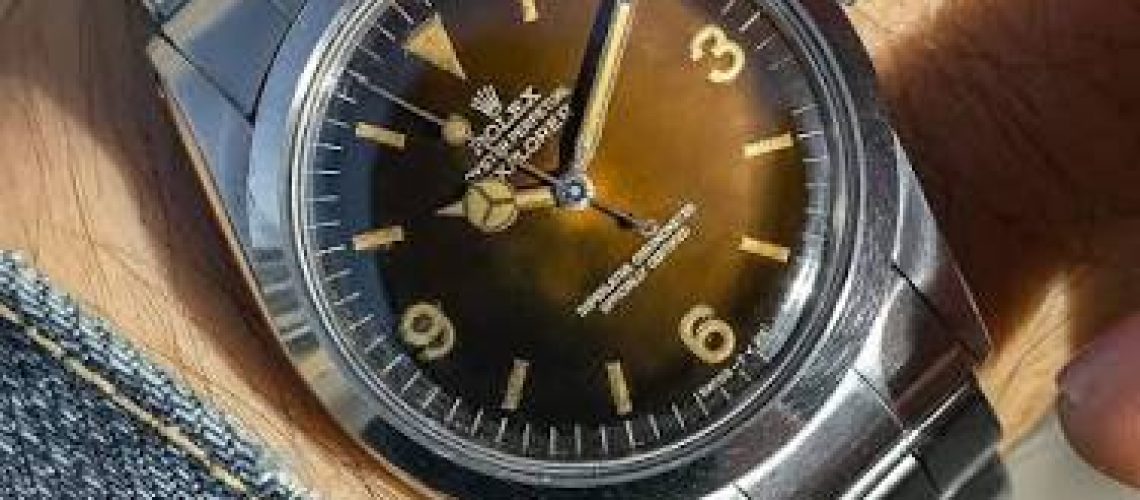
Tropical Dials: Is Moisture Responsible for Their Appearance?
Few topics in vintage watch collecting generate as much interest as tropical dials.
A tropical dial generally refers to a dial whose original coloration has changed, often from black to a shade of brown.
Some examples exhibit rich chocolate tones, while others develop uneven brown or bronze-like appearances.
Collectors may find these watches particularly appealing because the resulting colors can be visually distinctive.
However, the term tropical does not identify a single chemical process.
Different dial constructions can age differently, and discoloration may involve the behavior of pigments, lacquer, protective coatings, or other manufacturing materials.
Heat, light, and environmental exposure can influence certain changes.
Moisture may contribute to deterioration in some cases, but there is no sound basis for assuming that all tropical dials are the result of humidity or water intrusion.
Natural aging versus moisture damage
A dial that has developed an attractive brown appearance is not necessarily water damaged.
Conversely, a dial that looks visually appealing may still have experienced moisture exposure.
Collectors should evaluate additional evidence, including the condition of the hands, applied markers, case interior, and movement.
Corrosion around dial feet or internal metal components, for example, may provide evidence of moisture-related problems.
A uniformly aged dial with otherwise well-preserved components presents a different condition profile from one showing extensive corrosion, bubbling, or flaking.
The key is to evaluate the entire watch rather than treating a desirable dial color as proof of excellent condition.
The Difference Between Attractive Patina and Water Damage
This is arguably the most important distinction for anyone considering purchasing a vintage watch.
Patina is a descriptive term, but it can also be used in marketing to make deterioration sound desirable.
Not every aged surface deserves a premium.
And not every imperfection should be celebrated.
A watch can possess appealing cosmetic aging while remaining mechanically sound. Another watch may exhibit similar colors while suffering from significant internal corrosion.
The challenge is determining which situation applies.
| Potentially desirable aging | Possible warning signs |
| Evenly aged luminous markers | Lume that is flaking or visibly unstable |
| Consistent dial discoloration | Blistering, peeling, or extensive staining |
| Naturally softened case finish | Significant corrosion or pitting |
| Age-consistent changes to hands | Rust or corrosion on the hands |
| Stable cosmetic aging | Active deterioration or moisture inside the crystal |
These observations are indicators, not definitive diagnostic tests.
For example, even aging across luminous markers may be visually desirable, but it does not prove that the watch is original or moisture-free.
Similarly, an isolated spot on a dial does not automatically establish serious water damage.
The appropriate interpretation depends on the materials, model, production period, and condition of the entire watch.
Why the movement matters
A vintage watch’s movement may reveal problems that are not apparent from exterior photographs.
Corrosion can affect screws, bridges, wheels, springs, and other components.
Even relatively small areas of corrosion may create complications if they interfere with moving parts or precision surfaces.
A watch may continue running despite damage.
That does not mean the damage is harmless.
When purchasing an expensive vintage watch, a qualified watchmaker’s inspection can provide valuable information about the movement’s condition.
This becomes especially important when a dial or case shows signs suggesting possible moisture exposure.
How Moisture Affects Different Watch Materials
Not every component reacts to moisture in the same way.
The materials used in watch construction influence the type and severity of changes that may develop.
Stainless steel
Stainless steel is designed to resist corrosion through the formation of a protective chromium-rich oxide layer.
However, stainless steel is not completely immune to corrosion.
Under unfavorable conditions, including exposure to chlorides and moisture, localized corrosion such as pitting or crevice corrosion can occur.
Areas around casebacks, crowns, and other interfaces may deserve particular attention.
The presence of stainless steel does not eliminate the need for proper sealing and maintenance.
Brass
Brass is a copper-zinc alloy frequently used in watchmaking, including for certain movement components and dial substrates.
Depending on the environment, brass may experience tarnishing or corrosion.
Corrosion products can produce visible discoloration, while more severe deterioration may affect the underlying metal.
Because brass can be plated or coated, the appearance of an affected component also depends on its surface treatment.
Gold
Gold is comparatively resistant to many forms of corrosion, which helps explain its long-standing use in jewelry and watchmaking.
However, gold watch components are often alloys rather than pure gold.
The other metals in those alloys can influence their behavior under particular conditions.
Furthermore, a gold case does not protect the movement or dial from moisture if the watch’s seals are compromised.
A watch with a precious-metal case can still suffer serious internal water damage.
Luminous paint
Vintage luminous paints can contain materials that degrade with age and environmental exposure.
Moisture may accelerate certain forms of deterioration, but the precise response depends on the composition of the paint.
Collectors should be cautious around loose luminous particles, especially in watches that may contain radium.
Aging lume should not be scraped, cleaned, or manipulated without appropriate professional knowledge and precautions.
Can Two Identical Vintage Watches Develop Completely Different Patina?
Absolutely.
Two watches manufactured around the same period can develop dramatically different appearances.
One may retain a relatively clean dial with bright printing and light-colored markers.
Another may exhibit significant discoloration, darkened lume, and corrosion.
Several factors can explain these differences.
Environmental history: Watches stored in consistently dry conditions may experience different material changes from those exposed to high humidity or repeated moisture intrusion.
Usage patterns: A watch worn regularly in demanding conditions may encounter more opportunities for moisture exposure than one kept in controlled storage.
Servicing history: Gasket replacement, case maintenance, and previous repairs can influence the watch’s resistance to moisture.
Manufacturing variation: Differences in material composition, coatings, or production processes can affect how components age.
Previous damage: A single water-intrusion event may produce changes that distinguish one example from another for decades.
This variability is one of the reasons vintage watches are so difficult to evaluate using photographs alone.
Two watches with the same reference number may have very different condition histories.
Their appearances may also create very different levels of collector demand.
Does Moisture-Created Patina Increase a Watch’s Value?
Patina can influence collector demand, but moisture-related deterioration does not automatically increase a watch’s value.
The market distinguishes between appealing cosmetic aging and condition problems that compromise originality, appearance, or mechanical reliability.
Some collectors actively seek vintage watches with attractive dial discoloration or aged luminous markers.
Others prioritize watches with minimal cosmetic deterioration.
There is no universal rule that a watch with more patina is worth more.
Originality often matters more than discoloration
A watch with its original dial, hands, and other period-appropriate components may appeal to collectors who value preservation.
However, originality and condition are separate considerations.
An original dial can be heavily damaged.
A replacement dial can be cosmetically excellent.
Determining which example is more desirable requires evaluating the reference, rarity, condition, documentation, and preferences of the relevant collector market.
Patina should be evaluated alongside condition
Imagine two examples of the same vintage watch.
The first has a lightly aged dial, matching luminous material, and a clean movement.
The second has dramatic dial discoloration, rust on the hands, and evidence of corrosion inside the case.
A collector might find the second watch visually interesting.
However, its appearance should not distract from the potential mechanical and preservation concerns.
In many situations, corrosion and significant water damage will negatively affect desirability.
A visually unusual dial does not automatically compensate for the cost or difficulty of addressing other problems.
Why comparable sales matter
Collectors should be particularly cautious when sellers assign large premiums to watches described as having rare or exceptional patina.
The asking price is not proof of market value.
To evaluate whether a premium is justified, buyers should consider comparable completed transactions involving watches with similar references, originality, condition, and dial characteristics.
Even then, the market for unusual vintage examples can be difficult to interpret because genuinely comparable watches may be scarce.
A dramatic appearance may be uncommon without necessarily being desirable.
Rarity and demand are not the same thing.
How to Identify Possible Moisture Damage Before Buying
When examining a vintage watch, collectors should look beyond the overall appearance of the dial.
Several areas deserve particular attention.
Examine the dial closely
Look for irregular staining, bubbling, peeling, or corrosion around applied markers.
Pay attention to areas near the dial’s perimeter.
However, remember that photographs cannot reliably establish the underlying cause of every discoloration pattern.
Inspect the hands
The hands can provide useful clues.
Visible rust or corrosion may suggest exposure to moisture, although a definitive assessment requires additional examination.
Differences between the apparent age of the hands and dial may also raise questions about previous replacement or restoration.
Such differences do not automatically prove that a watch has been modified.
Look for condensation
Visible condensation beneath the crystal is an important warning sign.
If condensation appears inside a watch, moisture is present where it should not be.
The watch should be evaluated promptly by a qualified professional.
Do not assume that condensation will resolve harmlessly simply because it disappears from view.
Review the movement
Where appropriate, request movement photographs or an inspection by a competent watchmaker.
Signs of corrosion on movement components may materially change the assessment of a watch’s condition.
Movement inspections should be performed with appropriate tools and expertise, particularly when dealing with valuable or historically significant watches.
Ask about service history
A documented service history can provide useful context.
However, servicing does not guarantee that a watch has never experienced water intrusion.
Likewise, the absence of service records does not establish that moisture damage has occurred.
Documentation should be considered alongside the physical evidence.
Can Moisture Damage Be Reversed?
The answer depends on the nature and severity of the damage.
Some moisture-related problems can be addressed through professional servicing.
For example, a watchmaker may be able to clean or replace affected movement components, renew seals, and restore mechanical functionality.
However, corrosion can permanently alter metal surfaces.
Likewise, discoloration, lifting lacquer, or deterioration of dial printing may be irreversible without restoration or replacement.
This creates an important decision for vintage collectors.
Restoring a damaged dial may improve its cosmetic appearance, but it can also alter or remove original finishes.
Replacing original hands or luminous material may affect the watch’s historical character and collector appeal.
For particularly collectible watches, preservation may be preferable to aggressive cosmetic restoration.
The appropriate approach depends on the watch’s condition, significance, and intended use.
Should you clean the patina off a vintage watch?
Not automatically.
Cleaning or refinishing original components can permanently alter their appearance.
In some cases, attempts to remove discoloration may damage fragile printing, lacquer, or luminous material.
Collectors should avoid experimenting with solvents, abrasive products, or household cleaning methods on vintage dials.
If a watch requires conservation or restoration, consult a specialist familiar with the materials and construction of the particular model.
How to Protect Vintage Watches From Moisture
Preservation is generally easier than reversing damage.
Although no storage method can stop every aging process, several precautions can reduce unnecessary moisture exposure.
Store watches in a stable environment
Choose a clean, dry location away from obvious sources of humidity.
Avoid leaving valuable vintage watches in damp basements, bathrooms, or other environments where condensation is common.
A stable environment is preferable to one experiencing repeated extremes.
Use humidity monitoring when appropriate
Collectors maintaining substantial collections may benefit from monitoring relative humidity in their storage areas.
A hygrometer can help identify unusually humid conditions.
The ideal storage environment depends on the materials involved, so a single humidity target should not be assumed suitable for every collection.
The primary objective is to avoid prolonged dampness and condensation.
Maintain appropriate seals
If a vintage watch will be worn regularly, its sealing components should be assessed as part of routine maintenance.
A professional can inspect the crown, crystal, caseback, and relevant gaskets.
However, even a watch that passes a pressure test should be used in accordance with the limitations of its condition and construction.
Be cautious around water
Unless a qualified professional has assessed a vintage watch’s present water resistance, avoid unnecessary exposure to water.
Historical dive-watch branding is not a substitute for a current evaluation.
For collectors who prioritize preservation, keeping a valuable vintage watch away from swimming, showers, and other water exposure is often the more conservative approach.
Respond quickly to suspected water intrusion
If water or condensation appears inside the watch, seek professional attention promptly.
Continued operation may worsen damage if moisture has reached vulnerable movement components.
Avoid using heat sources such as hair dryers or attempting to open the watch without the proper expertise.
A qualified watchmaker can assess the situation and determine appropriate corrective action.
Why Collectors Are Drawn to Imperfection
Beyond chemistry and material science, patina raises an interesting question about the psychology of collecting.
Why do some collectors prefer watches that show their age?
Part of the appeal is individuality.
Modern manufacturing aims for consistency. Two examples of the same new watch are generally intended to look almost identical.
Vintage watches have lived through different environments, owners, servicing decisions, and patterns of use.
Those experiences can leave visible differences.
A slightly faded bezel, softened dial color, or aged set of luminous markers may give a watch a distinctive appearance.
For collectors who appreciate historical objects, these characteristics can contribute to the emotional appeal of ownership.
There is also a broader appreciation for originality.
A vintage watch that retains its original components may provide a more direct connection to its manufacturing period than one that has undergone extensive cosmetic restoration.
However, this appreciation should not become an excuse to overlook genuine damage.
There is a difference between preserving historical character and ignoring deterioration that threatens the object.
An informed collector can appreciate both the beauty of aging and the importance of mechanical preservation.
Should You Buy a Vintage Watch With Moisture-Related Patina?
There is no single answer.
A watch with moisture-related discoloration may still be collectible, enjoyable, and historically interesting.
But its condition deserves careful evaluation.
Before purchasing, consider whether the aging is stable, whether the movement shows evidence of corrosion, whether the original components remain intact, and whether the asking price reflects the watch’s actual condition.
It is also worth considering your intended use.
A collector purchasing a watch primarily for occasional enjoyment may have different priorities from someone who wants a vintage watch for frequent wear.
The cost and availability of replacement movement parts can also matter, particularly for unusual or discontinued calibers.
If the watch is especially valuable, an independent inspection may be a worthwhile part of the purchasing process.
Ultimately, attractive patina should be viewed as one characteristic of a watch, not as a substitute for evaluating the entire piece.
Frequently Asked Questions About Moisture and Watch Patina
Does humidity cause watch dials to turn brown?
Humidity can contribute to deterioration or discoloration of certain dial materials. However, brown dial coloration can also involve changes related to light, heat, coatings, pigments, and manufacturing chemistry. The appearance alone is insufficient to establish humidity as the cause.
Is patina the same as rust?
No. Patina is a broad term used to describe surface changes associated with aging and environmental exposure. Rust is a specific form of corrosion involving iron-containing materials. Some corrosion may be described as patina in collecting contexts, but the terms are not interchangeable.
Can a watch develop patina without being worn?
Yes. Material aging and environmental reactions can occur during storage. A watch does not need to be worn for its dial, luminous material, or metal surfaces to change over time.
Is moisture damage always visible?
No. Moisture-related corrosion can develop inside a watch without obvious exterior signs. A clean-looking dial does not guarantee that the movement is free of corrosion.
Does yellow or orange lume mean a watch has water damage?
No. Luminous material can change color through several aging processes. Color alone cannot reliably establish whether a watch has experienced water intrusion.
Are tropical dials always more valuable?
No. Collector demand varies according to the reference, originality, condition, visual appearance, rarity, and market preferences. A tropical appearance does not automatically justify a premium.
Can a vintage watch still be water resistant?
Yes, some vintage watches may retain meaningful water resistance, but that capability must be assessed based on their present condition. Original specifications alone are not sufficient.
Can you stop patina from developing?
You can reduce exposure to some factors that contribute to deterioration, particularly excessive humidity and water intrusion. However, it is not possible to guarantee that all materials will remain visually unchanged indefinitely.
Final Thoughts: Understanding the Beauty and Risks of Patina
Patina is one of the characteristics that makes vintage watch collecting so fascinating.
It reminds us that watches are physical objects shaped by their materials, construction, environment, and history.
Moisture can play a significant role in that process.
Through corrosion, chemical reactions, and the deterioration of coatings or luminous compounds, moisture can create visible changes that remain long after the original exposure.
Some of those changes may become part of a watch’s visual character.
Others may signal serious problems.
The distinction is especially important in a market where words like tropical, aged, and patina can influence how watches are presented and priced.
Collectors should appreciate the appearance of vintage watches without assuming that every imperfection is desirable.
A beautifully aged dial deserves attention, but so does the condition of the movement beneath it.
At Tailored Timepieces, we believe that understanding what you are buying is just as important as appreciating how it looks.
Whether you are considering your first vintage watch or adding another example to an established collection, learning how moisture affects watch materials can help you make more informed decisions.
Because ultimately, the goal is not simply to find a watch that looks old.
It is to understand how that watch has aged, what its condition tells us, and whether it deserves a place in your collection.