
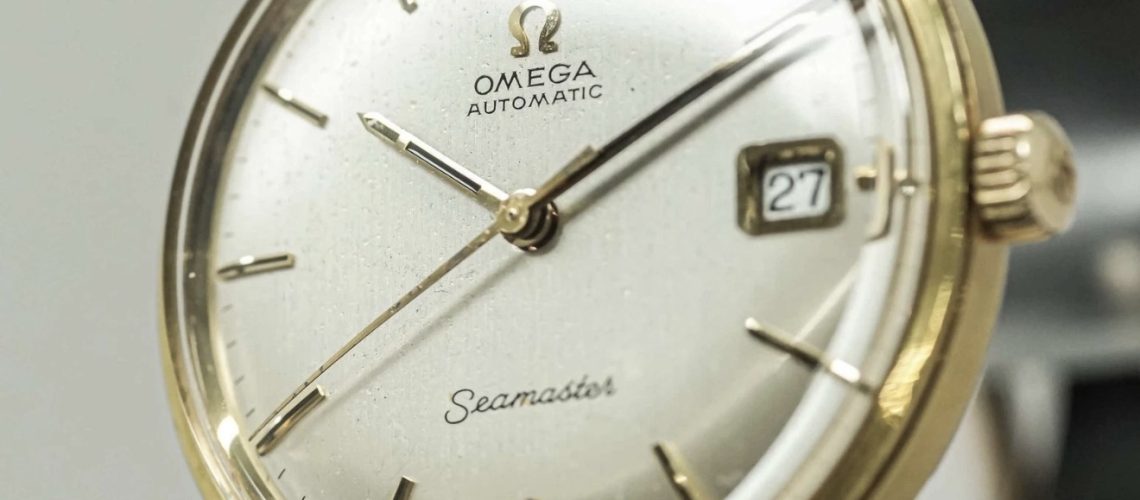

Imagine two vintage dress watches from the same manufacturer. One is older, with an early production date that makes for a great listing headline. Its dial has been repainted, its lugs have lost much of their original shape, and the seller has no service records. The other was made years later. It has scratches along the case and some discoloration on the dial, but the dial retains its original finish, the lugs still have their shape, and an itemized invoice shows what a watchmaker replaced during its last service. Which one would you rather own?
If your goal is to wear a well-preserved example of the design, the second watch gives you more to work with. You can see how the case was meant to look. You can judge whether the dial’s aging appeals to you. You have some evidence of what happened inside the case. The earlier production date might matter if it identifies a specific variation you collect. On its own, it tells you remarkably little about the watch you’ll actually receive.
Vintage watch condition matters because it determines how much of the original design survives, what the watch may need to run reliably, and whether the asking price makes sense for that specific example. Here’s how to assess those three things when you’re shopping.
Start With the Reference, Then Judge the Individual Watch
The reference number helps identify the model and gives you a starting point for research. A production year or range can narrow your search further, especially when a reference was made with several dial, hand, or bezel variations. Find comparable examples from the same production period where possible. An early dial can look unfamiliar simply because most of the photographs you’ve seen show a later configuration.
Once you know what belongs on the watch, look at what has survived. A photograph can show wear, a document can establish a service date, and an inspection can reveal damage or replacements. Each piece of evidence answers a different question. A year printed in a listing supplies none of that detail by itself.
This also helps when you’re comparing two listings with different asking prices. Before you pay extra for an earlier year, ask the seller to explain what changes with that year. If the answer is a distinct dial layout you’ve been looking for, you have a reason to consider the premium. If both watches represent essentially the same configuration for your purposes, spend your time comparing their dials, cases, movements, and service histories.
The Dial Deserves the Closest Look
The dial is the part you look at every time you check the time. It’s also where seemingly minor changes can alter the personality of a watch. A heavier font, a different minute track, or a fresh coat of paint can make a familiar design feel different on the wrist.
A redial is a dial that has been refinished, often with repainted surfaces or reprinted text. A service dial is a replacement dial supplied for service. An example might have its original dial plate with refinished printing, or it might have a genuine manufacturer replacement with a different appearance. Those histories matter when you’re paying for the watch as it was originally delivered. Horology Atlas’s vintage watch buying guide
Start with a sharp, straight-on photo. Compare the logo, minute track, lower dial text, and spacing around the markers with documented examples of the same variation. An oblique photo in diffuse light can help you see surface texture, scratches, or lifting finish. Check whether an apparent blemish moves or changes with the angle. Reflections and scratches on the crystal can make a dial look worse in a listing photo.
Treat a suspicious detail as a reason to investigate. A fuzzy photo can make original printing appear thick, and a reference may have more than one correct dial design. If the price rests on the dial being original, ask for the evidence behind the seller’s assessment. A clear photo and a reference-specific comparison are worth more than a confident adjective.
Patina and Damage Can Look Similar in Photos
Patina is a broad term for visible changes that develop over time. It can describe a dial that has shifted in color or luminous markers that have darkened. Whether those changes are attractive comes down to the individual watch and your taste. Look at the dial at normal viewing distance as well as under magnification. A spot that dominates a macro photo may barely register on the wrist, while uneven discoloration across the center may be the first thing you notice every time you wear it.
Look more closely when you see flaking finish, missing luminous material, or staining concentrated around part of the dial. Ask whether a watchmaker has inspected the watch and what they found. Similar-looking marks can have different causes, and a photograph may leave the origin unclear. Where moisture is suspected, the movement and the inside of the case deserve attention too. A seller’s description of the color as “patina” leaves those questions open.
Matching dial and hand lume can create an attractive, cohesive look. Color alone leaves originality uncertain. Hands and dial markers are different components and can age differently. If the watch is being sold at a premium for its original luminous material, ask whether either part has been relumed and what supports the answer.
Look at the Shape of the Case Before Counting Scratches
When you first look at a vintage watch, the scratch across the side of the case is easy to spot. The gradual loss of a lug’s profile is easier to miss. To see it, compare the watch with a well-preserved example of the same reference. Look at the width and contour of the lugs, where brushed and polished surfaces meet, and how the edges read from the side. The relevant details depend on the original case design. Some cases were made with soft curves, so a rounded edge by itself tells you little.
Heavy polishing can remove enough metal to soften the outlines or leave the lugs visibly uneven. A case can look bright in a listing photo while losing a defining feature of the design. Light refinishing can leave the case’s shape largely intact. When a seller describes a watch as “unpolished,” ask what supports that claim and request photographs from angles that show the geometry. Photos can help you judge the shape even when the full polishing history is unknown. Horology Atlas’s vintage watch buying guide
Consider where any wear is located. If a dent sits on an exposed upper lug, decide how much it will bother you in normal use. If you see pitting near a sealing surface or significant damage around the crown, ask a watchmaker what it may mean for the case. A watch originally sold as water-resistant should be treated as having unverified water resistance until its current condition has been assessed and it has been appropriately tested. Phillips watch buyers’ guide
A Running Movement Still Has a Service History to Explain
“Running” tells you the watch was observed operating. To learn how it behaves over a day, how long it runs after winding, or whether its complications work properly, ask for more specific observations. With a chronograph, for example, ask to see it start, stop, and reset. If the watch has a calendar function, ask whether the seller or watchmaker checked its operation. A movement photo can help identify the caliber and show visible damage, though an inspection can answer questions a photo leaves open. Even an auction condition report may omit mechanical replacements, defects, or restoration work. Phillips watch buyers’ guide
When a seller says a vintage watch was “recently serviced,” ask when the work happened, who performed it, and what the invoice lists. A record of a full overhaul gives you different information from a receipt for regulation or a crystal replacement. An invoice also gives you a chance to spot exterior changes that matter to collectors, such as a dial or hand replacement.
Factor service into the total cost before you decide a watch is a bargain. If there’s a known fault, get an estimate based on that fault and the specific movement. If the service history is unknown, leave room in your budget for an inspection and possible work. On an uncommon caliber, the availability of parts and a watchmaker willing to take on the job can matter as much as the initial quote. A low asking price feels different when the timeline for getting the watch on your wrist is open-ended.
Weigh Replacement Parts According to Their Role
A vintage watch can contain parts fitted at different points in its life. Ask whether each important part is believed to be original to the watch, correct for the period, a later manufacturer service replacement, or aftermarket. A component can be genuine and fit correctly while having been installed years after the watch left the factory. Prior repairs can affect everything from crowns and crystals to hands, bracelets, and movement components. Phillips watch buyers’ guide
Think about what each part contributes. If you plan to wear a simple vintage dress watch regularly, a correctly fitted replacement crystal may be entirely acceptable to you. If the distinctive dial is the reason you collect that reference, a replacement dial with different printing can change the appeal of the whole watch. You may feel differently about a replaced crown if it was fitted during documented work and the original is included.
Check the bracelet independently of the watch head. Ask for its usable length, the number of included links, and photos of the clasp and end links. A bracelet that’s original to the watch has limited practical value to you if it won’t fit and suitable additional links are hard to find. Conversely, a head-only example may suit you if you prefer a leather strap and the price reflects what is included.
Compare Sold Watches in Comparable Condition
When you look up sold prices, start with the same reference and configuration. Then open the actual listings. Look at the dial and case photos, check for disclosed restoration, and see whether the original bracelet or usable service documentation was included. For an auction result, check whether the published figure includes the buyer’s premium before comparing it with a dealer’s asking price. A result with a thin description is a weaker comparison when condition is the question you’re trying to answer.
Suppose a seller points to a strong result for the same reference. That example had a sharp case, a well-preserved original dial, and a bracelet that fit the buyer. The watch you’re considering has a redial and an unknown service history. The auction result tells you what someone paid for a materially different example. Look for sales closer to the watch in front of you. If you can’t find one, acknowledge the uncertainty in your valuation and decide what the watch is worth to you given its condition.
The same reasoning applies when an older example comes with a box and papers. Those accessories may matter to you, particularly if the papers can be matched to the watch. Evaluate them alongside the watch’s present condition. Original paperwork can document a point in its history, while a later service invoice may tell you more about the dial and hands you’d be buying today.
When an Earlier Production Date Is Worth Paying For
Age becomes relevant when it helps establish something specific about the watch. An early production range may be associated with a dial variation, a different case detail, or a configuration that collectors deliberately seek. If you collect that variation, you may accept more wear or a longer wait for service to own it. The same can be true when the watch has documented personal significance, such as a family connection or a meaningful presentation engraving.
Condition still shapes the decision. If early dial printing is the thing you’re paying for, a later replacement dial weakens the reason for buying that particular watch. If a case engraving is central to the story, ask for a sharp image and any documentation connecting it to the person or event. Make the seller’s age claim do some work. It should help explain a feature, a provenance claim, or a configuration that matters to you.
Five Questions to Ask Before Buying a Vintage Watch
1. What exactly am I buying? Confirm the reference and the configuration the seller is offering. Ask what evidence supports the stated production date if it affects the price.
2. What has changed? Ask about dial refinishing, replacement hands, reluming, case work, and the originality of the bezel, crown, and bracelet where relevant.
3. What can I see for myself? Request a straight-on dial photo and images of the side profiles, lugs, and caseback. Ask for movement photos if the seller has them or can have the case safely opened by a watchmaker.
4. How does it run, and what work has it had? Get the service invoice if available. Ask which functions were checked and whether the watch has any known mechanical or case issues.
5. Does the price reflect this example? Compare like-for-like sales, then account for missing parts, likely service needs, and any uncertainty that remains. Decide which imperfections you would be happy to live with.
If the answers leave you with a choice between a slightly younger watch in honest, well-documented condition and an older watch with an impressive date and an unclear history, picture wearing both for a month. Which dial would you rather see every morning? Which watch would you feel comfortable handing to a watchmaker? Which seller could explain the price using details you can actually see? Those answers will do more for your collection than the number of years between the two watches.