
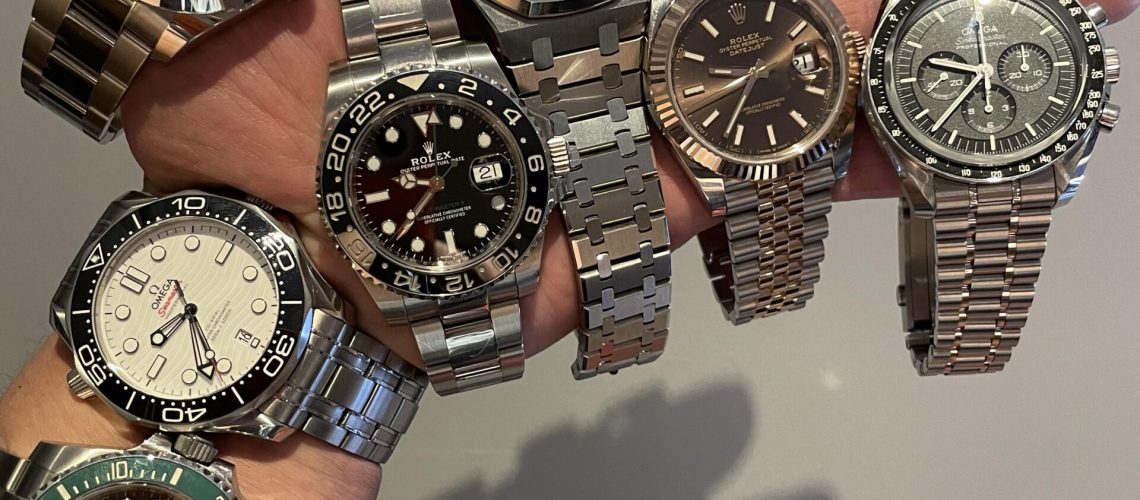

The Problem With Flex Culture in Watches
Walk into almost any watch-related social media page today and you’ll notice something.
It’s no longer about the watches.
It’s about proving you own them.
The luxury watch hobby has always carried an element of status. For decades, wearing a Rolex, Patek Philippe, or Audemars Piguet communicated success. These watches represented years of hard work, milestones, achievements, or family tradition.
Today, however, something has changed.
Thanks to Instagram, TikTok, YouTube Shorts, and other social platforms, a new culture has emerged—one built less around appreciating watches and more around showcasing wealth.
Collectors call it flex culture.
While social media has undoubtedly introduced millions of people to mechanical watches, it has also created unrealistic expectations, encouraged poor financial decisions, and shifted attention away from what made this hobby special in the first place.
Let’s talk about why.
What Is Flex Culture?
Flex culture isn’t simply posting a watch online.
Sharing a recent purchase or celebrating a milestone isn’t the problem.
Flex culture is when the primary reason for buying, wearing, or discussing a watch becomes validation from other people.
The watch becomes secondary.
The attention becomes the goal.
You can usually spot it pretty quickly.
Photos featuring luxury cars, stacks of cash, designer clothing, expensive dinners, and watches carefully positioned for maximum attention.
Captions that focus on price rather than craftsmanship.
Comments debating market value instead of movement finishing.
Videos designed to provoke envy rather than educate.
Instead of asking:
“Why is this watch interesting?”
The conversation becomes:
“How expensive is it?”
That’s an entirely different hobby.
Watches Become Scoreboards
One of the biggest casualties of flex culture is perspective.
Collectors begin measuring themselves against strangers they’ve never met.
Someone buys their first Omega Speedmaster.
Instead of enjoying it, they immediately see someone online wearing a Daytona.
Suddenly their incredible watch feels “small.”
A collector purchases a vintage Tudor.
Five minutes later they’re scrolling through someone showing off six Richard Milles.
The excitement disappears.
This creates what psychologists call the hedonic treadmill.
Every achievement quickly becomes normal.
Then you need something bigger.
Something rarer.
Something more expensive.
The finish line constantly moves.
No collection is ever enough because someone online always appears to have more.
Ironically, many of these people aren’t even collectors.
They’re content creators.
Dealers.
Borrowing inventory.
Renting watches.
Or simply presenting a carefully edited version of reality.
The Rise of the “Starter Watch” Problem
Another consequence of flex culture is how people now talk about entry-level luxury watches.
We’ve somehow reached a point where watches costing several thousand dollars are dismissed as “starter pieces.”
Think about that.
A watch costing $5,000…
$8,000…
Even $10,000…
Is now considered “basic.”
For the overwhelming majority of people, that’s an enormous purchase.
It’s something they’d save months—or years—for.
Yet social media has distorted reality.
Collectors begin apologizing for owning an Omega.
They call a Tudor “settling.”
They describe a Grand Seiko as a stepping stone.
That’s absurd.
These are extraordinary watches with incredible engineering, history, finishing, and value.
If social media disappeared tomorrow, those watches would still be exceptional.
Buying for Other People Instead of Yourself
Perhaps the biggest danger of flex culture is that it changes why people buy watches.
Instead of asking:
- Do I love this design?
- Will I enjoy wearing it?
- Does it fit my collection?
- Does this represent something meaningful?
People begin asking:
- Will this get likes?
- Will people recognize it?
- Is it hype enough?
- Will other collectors approve?
That mindset almost always leads to regret.
The happiest collectors we meet are rarely the ones chasing every hot release.
They’re the people who genuinely love what they own.
Maybe it’s a vintage Seamaster inherited from a grandfather.
Maybe it’s an old Datejust worn every day for twenty years.
Maybe it’s a quirky independent brand almost nobody recognizes.
Those watches often bring more happiness than the latest “must-have” release because the owner bought them for themselves—not the algorithm.
The Endless Hype Machine
Social media rewards novelty.
Algorithms don’t care if you’ve happily worn the same watch for five years.
They reward whatever is new.
That creates an endless cycle.
Every week there’s another:
- “Investment opportunity.”
- “Sleeper watch.”
- “Next Daytona.”
- “Best watch under $10,000.”
- “Don’t miss this release.”
Collectors begin feeling like they’re constantly behind.
They worry they’re missing the next big thing.
This is known as FOMO—fear of missing out.
Ironically, FOMO often causes people to buy watches they never actually wanted.
They simply didn’t want to miss the trend.
Several years later?
Many of those hype watches quietly disappear from conversations while timeless classics remain exactly where they’ve always been.
Still respected.
Still worn.
Still appreciated.
That’s one of the biggest lessons experienced collectors eventually learn.
Hype changes.
Quality doesn’t.