
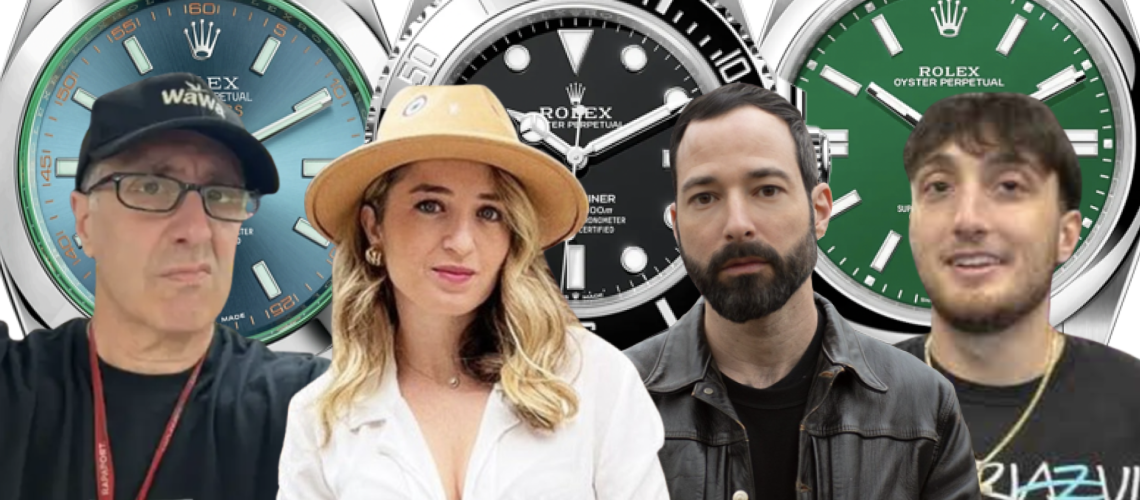

The Double-Edged Sword of Social Media Watch Culture
The luxury watch industry has never been more visible.
Twenty years ago, learning about watches required magazines, forums, trade shows, or spending time with collectors. Today, a single scroll through Instagram, TikTok, or YouTube exposes millions of people to Rolex, Patek Philippe, Audemars Piguet, Omega, Tudor, Cartier, and countless independent brands.
On the surface, that seems like a good thing.
More exposure means more enthusiasts. More enthusiasts mean more sales. More sales mean a healthier industry.
Yet many longtime collectors, dealers, and enthusiasts have begun asking a controversial question:
Are watch influencers actually hurting the watch industry?
The answer isn’t as simple as yes or no.
Watch influencers have helped grow the hobby in ways that would have been impossible a decade ago. At the same time, they have also contributed to speculation, misinformation, unrealistic expectations, and a culture increasingly focused on hype rather than horology.
Let’s break it down.
The Good: Watch Influencers Brought Millions Into the Hobby
Before criticizing influencers, it’s important to acknowledge what they’ve done right.
The modern watch boom would not exist in its current form without social media.
Thousands of collectors discovered their first luxury watch through YouTube videos.
Many learned the differences between mechanical and quartz movements from creators who made technical topics approachable.
Some of the largest channels have introduced audiences to brands they otherwise never would have encountered.
Without watch influencers:
- Many younger collectors would never discover mechanical watches.
- Independent brands would struggle for exposure.
- Vintage collecting would remain a niche hobby.
- Educational content would be far less accessible.
For every collector who complains about influencers, there is another collector whose passion started because of one.
The reality is that social media helped save mechanical watchmaking from becoming an aging niche industry.
That matters.
The Shift From Enthusiasts to Content Creators
The problem began when collecting watches became secondary to creating content about watches.
Years ago, many respected voices in the hobby were collectors first.
Today, algorithms reward something entirely different.
Content creators are incentivized to:
- Create controversy
- Generate outrage
- Make extreme predictions
- Promote hype
- Chase engagement
The result?
Balanced opinions often lose to dramatic headlines.
Examples include:
- “Rolex Prices Are About To Explode!”
- “Never Buy This Watch!”
- “The Market Is Crashing!”
- “This Watch Will Triple In Value!”
These headlines generate clicks.
But they don’t always generate accurate information.
Over time, audiences begin treating speculation as fact.
The Rise of the “Investment Watch” Problem
One of the biggest changes in watch culture has been the transformation of watches from personal objects into financial assets.
A watch should primarily be:
- Something you enjoy wearing
- Something you appreciate mechanically
- Something that reflects your taste
Yet social media often promotes a different message.
Many influencers focus heavily on:
- Future value
- Scarcity
- Appreciation potential
- Market performance
Collectors increasingly ask:
“Will this go up?”
Instead of:
“Do I love it?”
That shift fundamentally changes the hobby.
When every purchase becomes an investment decision, passion often disappears.
The collector becomes a speculator.
The watch becomes a stock ticker.
FOMO Is Now Driving Purchases
Fear of Missing Out has become one of the strongest forces in the modern watch market.
Influencers often showcase:
- Hard-to-get Rolex models
- Rare Patek Philippe references
- Limited-edition collaborations
- Watches with long waiting lists
The message may not be intentional, but viewers often interpret it as:
“If I don’t buy this now, I’ll never get one.”
As a result, buyers rush into purchases they don’t fully understand.
Many later discover:
- The watch doesn’t fit their lifestyle.
- They don’t actually enjoy wearing it.
- They bought it because someone else told them it was important.
This creates a cycle of flipping, regret, and dissatisfaction.
The Constant Flex Culture
Perhaps the biggest criticism aimed at modern watch influencers is the rise of flex culture.
A significant portion of watch content today revolves around:
- Collection value
- Exotic cars
- Private jets
- Exotic vacations
- Massive watch rolls
The focus often shifts away from horology and toward status signaling.
There is nothing wrong with success.
There is nothing wrong with expensive watches.
However, when content becomes entirely focused on wealth, newer collectors may feel excluded.
A hobby that should be welcoming can suddenly feel like a competition.
Questions become:
- Who has the rarest watch?
- Who spent the most money?
- Who owns the biggest collection?
Instead of:
- What makes this watch interesting?
- What history does it have?
- Why do you enjoy it?
That change has consequences.
Misinformation Travels Faster Than Facts
Another challenge is the speed of social media.
Creators are rewarded for being first.
Not necessarily for being correct.
As a result, misinformation spreads rapidly.
Examples include:
- Incorrect production numbers
- False scarcity claims
- Inaccurate market predictions
- Misunderstood technical specifications
- Rumors presented as facts
Many viewers assume large audiences equal expertise.
Unfortunately, follower count and expertise are not always the same thing.
Some of the most knowledgeable people in horology have relatively small audiences.
Meanwhile, some of the largest channels prioritize entertainment over education.
The two are not always aligned.
The Rolex Problem
No discussion about watch influencers would be complete without talking about Rolex.
Rolex is arguably the most recognized luxury watch brand in the world.
But social media has amplified Rolex obsession to unprecedented levels.
For many new collectors, luxury watches effectively mean:
Rolex.
That’s it.
The consequence is that incredible brands often get overlooked:
- Grand Seiko
- Jaeger-LeCoultre
- Blancpain
- Glashütte Original
- Breguet
Many collectors spend years chasing a Rolex allocation while ignoring some of the finest watchmaking available today.
Influencer culture didn’t create this phenomenon entirely.
But it certainly accelerated it.
Are Influencers Creating Unrealistic Expectations?
One hidden issue rarely discussed is how social media affects buyer expectations.
Many influencers have direct relationships with brands, dealers, and industry insiders.
As a result, they often receive:
- Early access
- Preferred allocations
- Loaner watches
- Industry pricing
- VIP treatment
The average collector does not.
A viewer may watch a creator casually acquire a sought-after watch and assume the process is normal.
Then reality hits.
They discover:
- Waiting lists exist.
- Premiums exist.
- Allocations are limited.
- Dealer relationships matter.
The gap between expectation and reality creates frustration.
The Dealer-Influencer Relationship
Another controversial area is the relationship between influencers and watch dealers.
Many influencers depend on dealer relationships for:
- Inventory access
- Sponsorships
- Collaborations
- Affiliate commissions
Most creators disclose these relationships responsibly.
Some do not.
The concern is obvious.
Can someone objectively review a watch while simultaneously being compensated by parties who benefit from its sale?
It’s a fair question.
Transparency is critical.
Viewers deserve to understand when financial incentives exist.
The Good Influencers Still Matter
Despite all these criticisms, it would be unfair to paint every influencer with the same brush.
Many creators genuinely care about education.
They produce content focused on:
- Watch history
- Movement architecture
- Industry trends
- Restoration
- Collecting philosophy
These creators often inspire deeper appreciation for horology.
They encourage viewers to think critically.
They promote collecting based on personal taste rather than hype.
The industry needs more of these voices.
Not fewer.
What Smart Collectors Should Do
The solution isn’t avoiding watch influencers entirely.
The solution is learning how to consume content intelligently.
When watching any influencer:
Ask Questions
- Is this educational or promotional?
- Is evidence being provided?
- Are opinions being presented as facts?
Diversify Sources
Follow multiple creators.
Read forums.
Talk to dealers.
Attend watch meetups.
Handle watches in person.
Buy What You Love
The most important rule remains unchanged.
Buy the watch you want to wear.
Not the watch someone else tells you to buy.
Ignore Short-Term Hype
Most trends eventually fade.
Good watches tend to remain good watches.
The collector who buys based on personal enjoyment usually ends up happier than the collector chasing every trend.
The Real Threat Isn’t Influencers
Here’s the uncomfortable truth.
Watch influencers are not the real problem.
They are a reflection of what audiences reward.
Algorithms amplify:
- Outrage
- Flexing
- Scarcity
- Hype
Because those topics generate engagement.
If viewers consistently rewarded thoughtful educational content, platforms would promote more of it.
Influencers didn’t create the demand.
They responded to it.
The responsibility belongs to everyone:
- Creators
- Dealers
- Brands
- Collectors
- Viewers
Final Thoughts: Are Watch Influencers Hurting the Industry?
Sometimes.
But they’re also helping it.
Watch influencers have introduced millions of people to horology, mechanical engineering, and collecting. They’ve helped grow the market, support independent brands, and make watch education more accessible than ever.
At the same time, they have contributed to hype cycles, unrealistic expectations, speculative buying, and a culture increasingly obsessed with status rather than appreciation.
The future of the hobby depends on finding balance.
The healthiest collectors aren’t the ones who buy every trending release.
They’re the ones who understand why they collect in the first place.
Because at the end of the day, the best watch isn’t the one with the most views, the longest waiting list, or the highest resale value.
It’s the one that still makes you smile every time you put it on your wrist.