
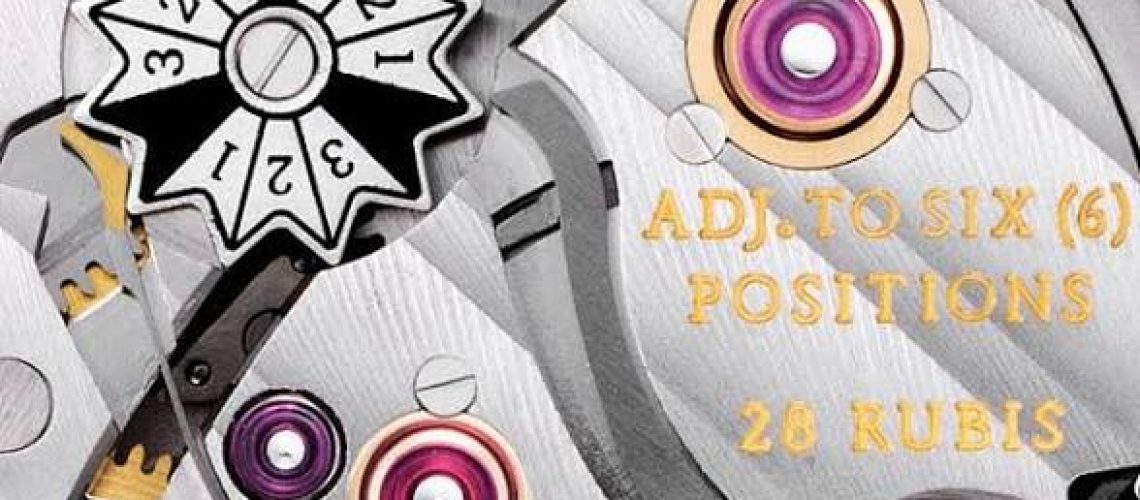

Does a Higher Jewel Count Mean a Better Watch?
A higher jewel count does not automatically mean a better watch. Jewels serve important functions inside a watch movement, but their total number is not a universal measure of accuracy, craftsmanship, reliability, or value.
When comparing watches, it is easy to assume that 31 jewels must be better than 25, or that a movement with 24 jewels must outperform one with 17. The numbers appear precise, and the word “jewels” suggests something valuable.
However, the useful question is what those jewels actually do.
A jewel count can help explain a movement’s construction. It cannot replace an understanding of its design, performance, condition, and suitability for your needs.
For anyone shopping for a mechanical watch, evaluating a vintage piece, or trying to understand movement specifications, knowing the difference can prevent an expensive misunderstanding.
What Are Jewels in a Watch?
The jewels inside a watch movement are small components used as bearings and contact surfaces. Modern watch movements commonly use synthetic rubies because of their hardness and suitability for precision mechanical applications.
They are functional movement parts, separate from gemstones set into a dial, bezel, or case.
Movement manufacturer MIYOTA identifies several types, including hole jewels, cap jewels, pallet jewels, and roller jewels. Each serves a particular purpose within the mechanism.
This distinction matters when reading a watch description. A watch advertised as having a jeweled movement is describing its internal construction. A diamond bezel describes an external decorative feature. Those are separate characteristics and should be evaluated separately.
The movement’s jewel count also does not tell you the quality or value of any gemstones used on the exterior.
What Do Watch Jewels Actually Do?
Inside a mechanical watch, small rotating components need precise support. The ends of their shafts, called pivots, turn within bearings.
Jewel bearings provide hard contact surfaces that help reduce friction and wear. Their purpose is to support the movement’s operation at specific locations, rather than simply add valuable material.
Different jewels perform different tasks:
- Hole jewels support rotating pivots.
- Cap jewels help control movement along a shaft’s axis and retain lubricant.
- Pallet jewels and roller jewels serve contact functions within the escapement mechanism.
These are related jobs, but they are not interchangeable. Adding a jewel makes engineering sense when its location and function justify it.
Horopedia’s description of a simple jewel bearing illustrates how precise this arrangement is: a pivot fits inside a calibrated hole, while a surrounding recess holds lubricating oil. The jewel is part of an engineered bearing system.
That is why counting the jewels alone leaves out so much information. The total does not describe their dimensions, placement, installation, or the condition of the components working against them.
Why More Jewels Do Not Automatically Mean Higher Quality
A jewel count tells you how many jewels a movement contains. It does not tell you how successfully the entire movement has been designed and manufactured.
Consider the difference between counting components and evaluating their execution.
Knowing how many parts something contains does not establish whether those parts fit correctly, work efficiently, or suit the intended task. The same principle applies to watch movements.
Two movements with different layouts may need different bearing arrangements. A higher count can reflect that difference without establishing that one is better made.
Likewise, two movements with identical jewel counts can have different specifications, finishing, adjustment, and service requirements.
For a buyer, the practical implication is straightforward: a higher jewel count requires an explanation before it deserves a premium.
If the additional jewels support a feature you want or solve a particular engineering problem, that information may be relevant. If the seller presents the number as proof of overall superiority, ask for more detail.
A Real Example: Seiko’s 23-Jewel and 24-Jewel Movements
Seiko provides a useful comparison in its published specifications for the 4R35 and 4R36 movements.
| Specification | Seiko 4R35 | Seiko 4R36 |
| Winding | Automatic with manual winding | Automatic with manual winding |
| Calendar display | Date | Day and date |
| Jewel count | 23 | 24 |
| Published power reserve | Approximately 41 hours | Approximately 41 hours |
| Published daily rate range | −35 to +45 seconds | −35 to +45 seconds |
These figures come from Seiko’s instructions for the two calibers.
The comparison demonstrates why jewel count should be read alongside the other specifications.
The 24-jewel movement has a different calendar display, but the published accuracy range and power reserve are the same. The extra jewel does not establish a tighter timekeeping specification.
For someone who wants a day display, the 4R36 offers a relevant feature. For someone who prefers a date-only dial, the 4R35 may be the more suitable choice.
Choosing between them should begin with those requirements. Declaring the 24-jewel movement universally better would go beyond what the specifications show.
Does a Higher Jewel Count Improve Accuracy?
A higher jewel count does not, by itself, establish better accuracy.
Seiko’s comparison already provides a concrete example: different jewel counts, identical published daily rate ranges.
Seiko also explains that mechanical watch performance depends on conditions of use, including temperature, arm movement, wearing time, and whether the mainspring is fully wound. Those variables are absent from a jewel-count figure.
When accuracy matters, investigate accuracy directly.
Ask for the manufacturer’s stated tolerance for the exact caliber or watch reference. For a pre-owned watch, ask whether recent timing information is available and under what conditions it was measured.
A statement such as “31 jewels” cannot answer how the particular watch is running today.
It also cannot tell you whether the watch meets your expectations. A collector comfortable with a particular mechanical movement’s published tolerance may make a different choice from someone who prioritizes precise timekeeping above everything else.
The useful comparison is between documented performance and your requirements.
Why Different Movement Designs Have Different Counts
Watch movements are built around different objectives.
Some prioritize thinness. Others provide additional displays or functions. Their construction determines where bearings and other jeweled contact surfaces are used.
As an example, Bulgari specifies 31 jewels for the BVL 138 movement in its Octo Finissimo reference 103812. The same description identifies an automatic winding system with a platinum micro-rotor, a movement thickness of 2.23 millimeters, and a 60-hour power reserve.
Those specifications describe several aspects of the movement’s engineering. The jewel count is one entry within that larger picture.
If you are interested in a thin automatic watch, movement thickness and winding architecture provide useful context. If you are comparing watches for daily use, power reserve may matter to your routine.
The number 31 cannot communicate those qualities on its own.
It also should not be used to rank that movement against a completely different caliber without considering what each was designed to accomplish.
Is There an Ideal Number of Jewels?
There is no single jewel count that buyers should demand from every watch.
A minimum shopping rule such as “only buy watches with at least 25 jewels” would exclude movements without first examining their construction or purpose.
A more useful standard is whether the movement has an appropriate bearing arrangement for its design and whether the complete watch performs as expected.
For a specific watch, start by identifying the caliber. Then consult the manufacturer’s documentation or a qualified watchmaker who understands that movement.
This approach also avoids the opposite mistake: assuming that a low count automatically proves simplicity, efficiency, or superiority.
Neither a high number nor a low number deserves automatic praise. Both need context.
If two watches interest you, compare their actual functions, published performance, dimensions, service options, and condition. Jewel count can remain on the comparison sheet, but it should not decide the result.
Functional Jewels Matter More Than the Headline Number
The distinction between functional and nonfunctional jewels is formally recognized in horology. ISO 1112 is specifically titled “Horology — Functional and non-functional jewels.”
For a collector, that distinction reinforces the importance of asking what a jewel does.
A large number in a listing does not explain whether every jewel contributes to a meaningful mechanical function. Equally, an unusually high count is not sufficient evidence that the movement contains unnecessary jewels.
Avoid making either assumption.
If the count seems surprising, investigate the exact movement and its construction. Technical documentation is more useful than speculation based on a photograph or a dial inscription.
The strongest explanation connects the specification to an identifiable function. “It has more jewels” is incomplete unless the comparison also explains why those jewels are there and what benefit, if any, follows.
Do Jeweled Movements Still Need Lubrication?
Yes. Jewel bearings do not eliminate the need for appropriate lubrication.
Horopedia describes an oil-holding recess as part of a simple jeweled bearing. The bearing’s construction explicitly includes provision for lubricant.
This matters because a jewel count can sound like a promise of permanent durability. It is not a maintenance schedule or a condition report.
When considering a pre-owned watch, ask about documented service history and any inspection of its movement. If no records are available, treat the service history as unknown.
Do not translate “many jewels” into “unlikely to need attention.”
Likewise, a movement photograph showing attractive red jewels does not establish that the watch has been serviced properly. Visual appeal and mechanical condition require different evidence.
A qualified watchmaker’s assessment can address questions that a specification sheet cannot.
How Should You Evaluate Jewel Count in a Vintage Watch?
For a vintage watch, use the jewel count as one detail to verify against the correct movement specification.
Begin with identification. What is the watch reference? Which caliber should it contain? Does the available documentation apply to the actual version being offered?
If the listing’s jewel count conflicts with reliable documentation, ask the seller to explain the discrepancy. Do not immediately conclude that the watch is incorrect, and do not ignore the mismatch simply because the advertised count is higher.
There may be insufficient information to reach a conclusion until the movement is identified properly.
Next, separate originality questions from condition questions. A matching specification does not prove good mechanical condition. A running watch also does not, by itself, verify that every component is appropriate to the reference.
For a purchase decision, request clear photographs, available service records, and a precise description of what has been inspected. Those provide a stronger basis for judgment than a prominent jewel-count inscription.
What Should You Compare Instead?
Jewel count becomes more useful when it sits beside information that answers your actual buying questions.
Published Performance
Review the manufacturer’s accuracy specification and power reserve. Make sure the figures apply to the exact movement rather than a related model.
Current Condition
For a pre-owned watch, ask what is known about its operation today. Distinguish documented findings from statements such as “runs great.”
Functions
Decide which displays and features you will use. The Seiko example shows why a calendar difference can be more relevant than a one-jewel difference.
Service Support
Before buying, establish who can service the movement and whether the seller has information about service availability. Obtain estimates where necessary rather than inferring maintenance costs from the jewel count.
Wearability
Consider case size, thickness, legibility, bracelet or strap fit, and how the watch feels on your wrist. None of those can be judged by counting movement jewels.
Purchase Evidence
For a specific pre-owned watch, examine the listing, photographs, documentation, and seller’s answers together. Treat unsupported claims as questions to resolve before purchase.
Questions to Ask When a Seller Emphasizes Jewel Count
If a listing relies heavily on the number of jewels, ask:
- What is the exact movement caliber?
- Where can I verify its specifications?
- What functions or construction details explain the jewel count?
- What is the published accuracy tolerance?
- Is recent timing information available?
- What service history is documented?
- What specifically makes this movement preferable to the alternative?
These questions turn a headline number into a more useful discussion.
They also help distinguish between a specification and a selling claim. A seller can accurately state that a movement has 31 jewels without demonstrating that it is better than a movement with 25.
The additional claim needs additional evidence.
Frequently Asked Questions About Watch Jewels
Is a 24-Jewel Watch Better Than a 23-Jewel Watch?
Not automatically. Seiko’s 4R35 and 4R36 illustrate why: the manufacturer lists different jewel counts but the same published accuracy range and approximate power reserve. Compare the exact movements and their functions.
Are Watch Jewels Real Rubies?
Modern movement jewels commonly use synthetic ruby. MIYOTA explicitly identifies synthetic rubies among the materials used for its movement jewels. Their purpose is mechanical, rather than decorative.
Does Jewel Count Tell You How Long a Watch Will Last?
The count alone cannot establish an individual watch’s remaining life. It does not provide its service history, current condition, or evidence of how it has been used.
Should You Pay More for More Jewels?
Only if the complete watch offers benefits that justify the price to you. Ask what the additional jewels contribute before treating the number as a reason to spend more.
Can Jewel Count Help Identify a Movement?
It can be a supporting specification when checked against documentation. Use it alongside the caliber designation and other identifying details, rather than treating it as conclusive proof.
Buy the Watch With the Right Evidence
Jewel count is worth understanding because jewels perform important work inside a movement. Their placement and function help explain how that movement operates.
However, more jewels do not automatically mean better accuracy, greater reliability, or a better purchase.
Read the count alongside the caliber’s construction and published specifications. For a pre-owned watch, add evidence about the individual example’s condition and service history.
When browsing watches at Tailored Timepieces, use the movement specification as a starting point for informed questions. Choose the watch whose design, condition, features, and ownership requirements suit you.
A useful specification helps explain a watch. It should never replace evaluating the watch itself.