
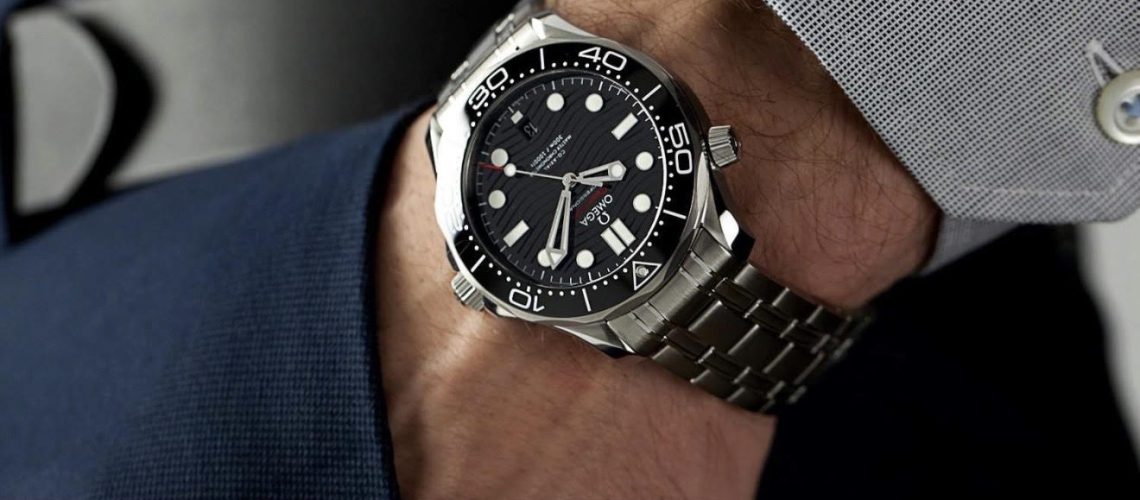

Buying your first watch is not about telling time. It is about signaling identity, making a financial decision, and entering a market where perception often outweighs substance.
Most first-time buyers make one of two mistakes:
- They chase a logo instead of understanding what they are buying
- Or they overcorrect and ignore brand power entirely
The optimal path sits in the middle. This guide breaks down how to navigate value vs brand recognition with precision so your first watch is a smart acquisition, not a regret.
What “Value” Actually Means in Watches
“Value” is often misunderstood. It does not simply mean “cheap.”
In the watch market, value is defined by:
- Build quality relative to price
- Movement reliability and serviceability
- Material integrity (steel, sapphire, lume, etc.)
- Long-term wearability
- Secondary market stability
Brands like Seiko and Tissot dominate this category because they produce watches that outperform their price point.
Visual Examples of Value-Oriented Watches
These watches are not about status. They are about:
- Getting a mechanical or reliable quartz movement
- Solid finishing
- Proven track record
They are the foundation of a disciplined collection.
What “Brand Recognition” Really Buys You
Brand recognition is not just hype. It has real-world utility.
When you buy a watch from Rolex or Omega, you are buying:
- Instant credibility
- Market liquidity
- Resale demand
- Cultural signaling
Visual Examples of High Brand Recognition
A recognizable watch answers questions before they are asked:
- “What do you do?”
- “Do you understand quality?”
- “Are you established?”
That signaling has value. Especially in business environments.
The Core Trade-Off: Value vs Brand Recognition
You are deciding between two different advantages:
| Category | Value Watch | Brand Recognition Watch |
|---|---|---|
| Price Efficiency | High | Lower |
| Build Quality per Dollar | Excellent | Good but priced in |
| Social Signaling | Low | High |
| Resale Liquidity | Moderate | Strong |
| Risk Level | Low | Moderate |
There is no universally correct answer. There is only alignment with your objective.
Step 1: Define Your Objective (This Decides Everything)
Before you look at a single watch, answer this:
Why are you buying this watch?
If your goal is:
- Learning the market
- Daily wear without stress
- Building foundational taste
→ Prioritize value
If your goal is:
- Networking or client-facing environments
- Status signaling
- Asset stability
→ Prioritize brand recognition
Without clarity here, you will default to emotion and marketing.
Step 2: Understand Movement Types (Critical for Value)
Your first watch will likely fall into one of three categories:
1. Quartz (Battery Powered)
- Accurate
- Low maintenance
- Lower cost
Best for: pure practicality
2. Automatic (Mechanical)
- Powered by wrist movement
- More craftsmanship
- Requires servicing
Best for: enthusiasts and long-term ownership
3. Solar (Hybrid)
- Light-powered quartz
- Minimal maintenance
Best for: set-and-forget users
Brands like Citizen excel in solar technology, while Hamilton offers strong entry-level mechanical pieces.
Step 3: Avoid the “Logo Trap”
This is where most first-time buyers fail.
They stretch their budget to buy the cheapest possible watch from a prestige brand.
Example:
- Entry-level fashion watch with a luxury logo
- Poor movement
- No resale value
- Weak build quality
This is the worst of both worlds.
Instead, if you are going brand-first, do it correctly:
- Buy a core model
- Avoid obscure references
- Stick to proven designs
For example:
- Rolex Datejust
- Omega Speedmaster
These hold identity and market relevance.
Step 4: Budget Structuring (Non-Negotiable)
Your first watch budget should follow this structure:
- 60–70% → Watch purchase
- 10–20% → Servicing buffer (if mechanical)
- 10–20% → Opportunity reserve
Why this matters:
- Mechanical watches require service every 5–10 years
- Market opportunities appear unexpectedly
- Liquidity matters
If you deploy 100% into a watch, you lose flexibility.
Step 5: Fit and Wearability (Often Ignored)
A technically “great” watch is useless if it wears poorly.
Key metrics:
- Case size (36mm–40mm is safe for most wrists)
- Lug-to-lug distance
- Thickness
- Bracelet comfort
A well-fitting Tissot will outperform a poorly sized Rolex in real-world wear.
Fit is value.
Step 6: Secondary Market Awareness
Even if you never plan to sell, you should understand:
- What your watch trades for
- How liquid it is
- Who buys it
This is where brand recognition wins.
A Rolex can be sold quickly in most markets.
A lesser-known brand may sit.
However, strong value brands like Seiko still maintain consistent demand at lower price points.
Step 7: Recommended First Watch Paths
Path 1: The Disciplined Buyer (Value First)
Start with:
- Seiko Presage or Prospex
- Tissot PRX
- Hamilton Khaki Field
Why:
- Learn the market
- Understand preferences
- Minimize financial risk
Path 2: The Strategic Buyer (Brand First)
Start with:
- Rolex Datejust
- Omega Seamaster or Speedmaster
Why:
- Immediate credibility
- Strong resale
- Entry into higher-tier market
Path 3: The Hybrid Approach (Recommended)
Start with:
- One value watch (daily wear)
- One brand-recognized piece (occasional use)
This gives you:
- Flexibility
- Learning curve
- Market exposure
Common First-Time Buyer Mistakes
Avoid these at all costs:
- Buying based on hype alone
- Ignoring fit and comfort
- Overpaying for condition or incomplete sets
- Underestimating servicing costs
- Chasing rare references too early
Precision matters early. Mistakes compound.
Final Framework: How to Decide
Use this simple decision filter:
- Do you need this watch to signal status immediately?→ Yes → Brand recognition
- Do you want to learn and build taste first?→ Yes → Value
- Are you unsure?→ Start with value, then scale
The Bottom Line
Your first watch is not your last watch.
The goal is not perfection. The goal is positioning:
- Positioning yourself in the market
- Positioning your capital intelligently
- Positioning your taste over time
If you prioritize value, you gain knowledge.
If you prioritize brand recognition, you gain leverage.
The strongest collectors understand both and deploy each intentionally.
That is how you build a collection that actually makes sense.