

The Short Answer
Yes—it is absolutely possible to estimate the age of a watch without box and papers. In many cases, experienced dealers and collectors can narrow it down to a specific year or production range using physical and mechanical clues alone.
However, accuracy depends on:
- Brand
- Model
- Condition
- Availability of reference data
This is where knowledge separates amateurs from professionals.
Why Box and Papers Matter (But Aren’t Everything)
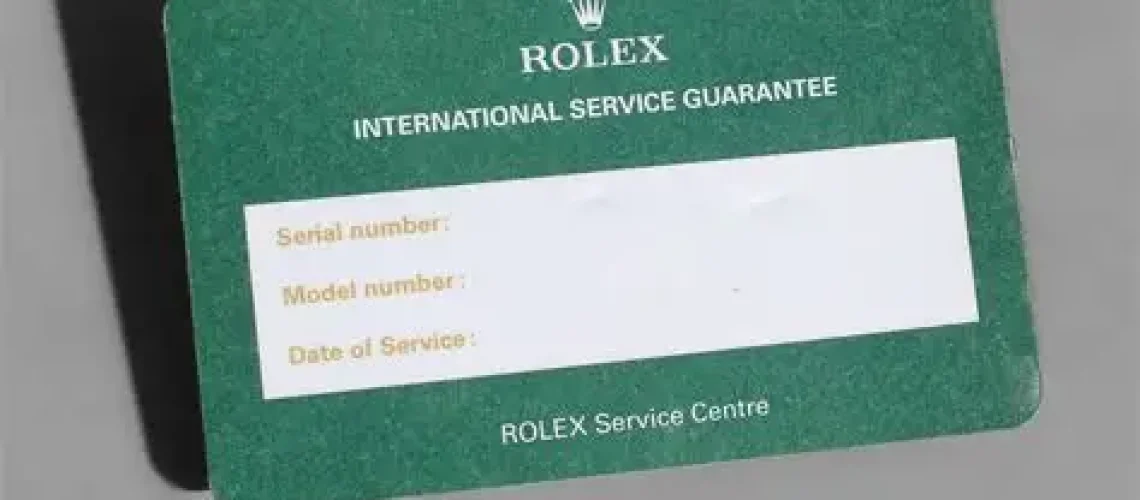
“Box and papers” typically refer to:
- Original warranty card or certificate
- Instruction manuals
- Hang tags and accessories
These items provide a documented sale date, not necessarily the exact production date.
Important distinction:
A watch can sit unsold for years before being purchased.
So even with papers, you’re often looking at a retail date—not a manufacturing date.
The Core Methods to Date a Watch Without Papers
1. Serial Numbers (The Most Powerful Tool)
Serial numbers are the closest thing to a fingerprint.
Brands like Rolex have historically used sequential serial numbers, allowing you to estimate production year.
How it works:
- Serial number is engraved on the case (or rehaut on modern Rolex)
- Cross-reference with known production charts
- Narrow down production year
Example:
- A Rolex with a serial in the 8 million range → mid-1980s production
 Important:
- Modern Rolex (post-2010) uses randomized serials, which eliminates this method’s precision
2. Reference Numbers (Model Timeline Context)
The reference number tells you:
- Model type
- Production era
- Movement generation
Example:
- Rolex Submariner 1680 → produced roughly late 1960s to late 1970s
- Rolex Submariner 16610 → produced ~1989–2010
Even without a serial, the reference alone gives you a production window.
3. Dial Variations (Where Experts Make Their Money)
Dial changes are often subtle—but extremely telling.
Collectors track:
- Font changes
- Logo placement
- Lume type
- Text spacing
Example:
- “Swiss” vs “Swiss Made” vs “T Swiss T” markings
- Matte dial vs glossy dial
These changes can narrow a watch down to:
- A few years
- Sometimes even a specific production batch
This is especially critical in vintage Omega and Rolex markets.
4. Movement Caliber (Internal Dating)
The movement inside the watch can provide strong clues.
Each caliber:
- Has a production timeline
- Evolves over time
- Sometimes includes its own serial number
Example:
- ETA movements used across brands can be dated based on design revisions
Limitations:
- Requires opening the watch
- Some movements are used across long periods
5. Case and Bracelet Codes
Often overlooked—but extremely valuable.
Caseback engravings:
- Production stamps
- Service marks
Bracelet codes (especially Rolex):
- Letter + number combinations indicating production date
Example:
- A bracelet stamped “AB” → corresponds to a specific year/month
This can help confirm whether:
- The bracelet matches the watch
- The watch has been altered over time
6. Materials and Construction Changes
Watchmaking evolves constantly.
You can identify age by:
- Acrylic vs sapphire crystal
- Tritium vs Super-LumiNova lume
- Aluminum bezel vs ceramic
Example:
- Tritium lume → pre-1998 Rolex
- Sapphire crystal → modern production
These clues create era boundaries.
7. Patina and Wear (Use Carefully)
Patina can suggest age, but it’s not definitive.
Signs include:
- Dial fading
- Lume discoloration
- Case wear patterns
Caution:
- Patina can be faked
- Over-polishing can erase age indicators
This method is supportive—not primary.
Brand-Specific Accuracy Levels
Not all brands are equal when it comes to dating.
High Accuracy Brands
- Rolex
- Patek Philippe
- Omega
These brands have:
- Documented serial ranges
- Active collector communities
- Extensive archival data
Moderate Accuracy Brands
- Breitling
- TAG Heuer
Possible, but requires more cross-referencing.
Low Accuracy Brands
- Microbrands
- Fashion watches
- Generic quartz pieces
Often:
Insufficient data to verify exact production year
Real-World Example: Dating a Rolex Without Papers
Let’s say you’re evaluating a Rolex Datejust 1601.
Step-by-step:
- Check serial number → places it in early 1970s
- Confirm reference → aligns with that era
- Examine dial → pie-pan dial consistent with period
- Check lume → tritium markers match age
- Inspect bracelet code → confirms timeframe
Final estimate:
Early 1970s production (high confidence)
No papers required.
Common Mistakes Buyers Make
1. Trusting Seller Claims Without Verification
Anyone can say “1985.”
Very few can prove it.
2. Ignoring Frankenwatches
A watch can be:
- Correct case
- Wrong dial
- Mismatched bracelet
Dating becomes misleading if parts are swapped.
3. Overvaluing Papers
Papers add value—but:
- They can be lost
- They can be forged
- They don’t guarantee originality
4. Assuming Exact Dates Are Always Possible
Sometimes:
Insufficient data to verify exact year
In those cases, professionals provide:
- A production range (e.g., 1993–1996)
When You Absolutely Need an Expert
If the watch is:
- High value
- Vintage
- Potentially rare
You should consult:
- Authorized dealers
- Independent watchmakers
- Established collectors
Or request:
- Archive extracts (available from brands like Omega)
The Business Reality (Dealer Perspective)
From a dealer standpoint:
You do not need papers to:
- Buy confidently
- Sell profitably
- Authenticate properly
What you need is:
- Knowledge
- Process
- Discipline
At Tailored Timepieces, dating a watch without papers is standard operating procedure—not an exception.
Final Verdict
Yes, you can absolutely tell the age of a watch without box and papers.
But here’s the real truth:
The ability to do it accurately is a skill—not a guarantee.
The hierarchy of reliability:
- Serial number
- Reference number
- Dial and component analysis
- Movement inspection
- Supporting clues (bracelet, materials, patina)
If all align:
- You can date a watch with high confidence
If they don’t:
- Walk away or proceed cautiously