
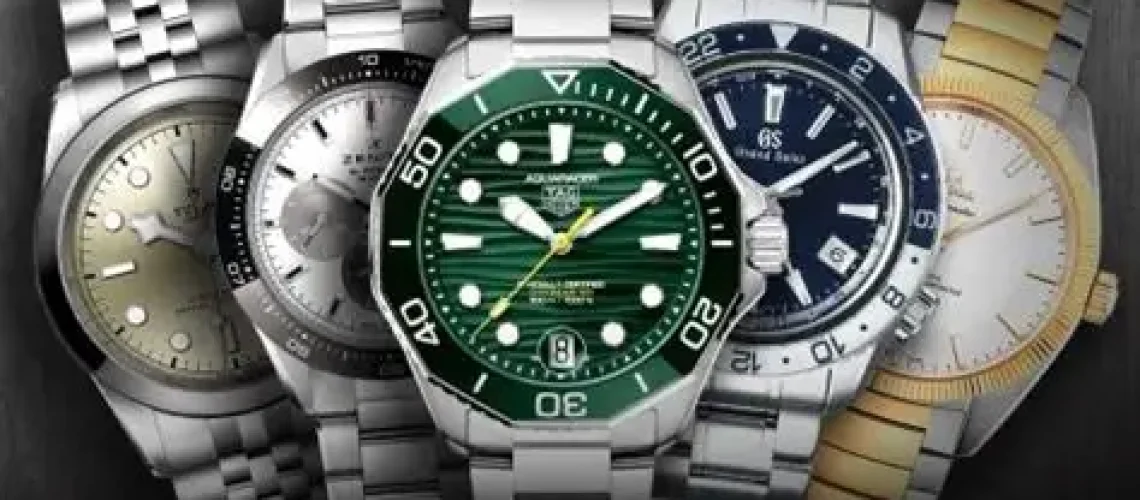

For decades, luxury watch collecting revolved around a relatively small group of household names. If you wanted prestige, investment potential, or collector respect, the answer almost always pointed toward the same brands.
Today, however, something interesting is happening.
Collectors are becoming more educated than ever before. Information is everywhere. Social media has exposed thousands of niche manufacturers. Independent watchmakers are producing incredible pieces in extremely limited numbers. At the same time, many enthusiasts have grown tired of waiting lists, inflated secondary market prices, and seeing the same watches on everyone’s wrist.
The result?
Smaller brands are no longer the alternative—they’re becoming the destination.
Some of the most exciting watches released each year don’t come from the largest manufacturers. Instead, they’re coming from companies producing a few hundred or a few thousand watches annually.
Exclusivity is no longer determined solely by price.
It’s determined by rarity, craftsmanship, originality, and community.
Let’s explore why smaller watch brands are gaining influence faster than ever before.
The Meaning of Luxury Has Changed
Twenty years ago, luxury often meant recognition.
People wanted a watch that everyone else recognized immediately.
Today, collectors are asking different questions:
- Who designed it?
- How many were made?
- What’s the story?
- Is the movement interesting?
- Will I ever see another one?
Those questions naturally favor smaller manufacturers.
Instead of chasing logos, collectors are chasing stories.
Owning something few people have become far more appealing than owning something everyone recognizes.
Ironically, true exclusivity often exists below the biggest luxury brands.
The Internet Has Leveled the Playing Field
One of the biggest reasons boutique brands have exploded is simple:
Information is free.
Years ago, learning about independent watchmaking required attending trade shows, buying specialized magazines, or networking with experienced collectors.
Now?
One YouTube review can introduce hundreds of thousands of viewers to a brand they’ve never heard of.
Instagram showcases macro photography that highlights finishing previously only visible in person.
Forums allow collectors from around the world to discuss microbrands alongside established manufacturers.
Education has eliminated many barriers.
Collectors are discovering exceptional watches regardless of advertising budgets.
Collectors Want Something Different
Walk into almost any luxury shopping district and you’ll likely see:
- The same dive watches
- The same GMT watches
- The same integrated bracelet sports watches
They’re fantastic watches.
But they’re also everywhere.
Collectors eventually reach a point where they stop asking:
“What’s the most popular watch?”
Instead they ask:
“What’s something nobody else has?”
That shift changes purchasing behavior dramatically.
Smaller companies often produce:
- Unique case designs
- Experimental dial materials
- Handmade finishing
- Unusual complications
- Original color combinations
Instead of following trends, many create them.
Limited Production Creates Genuine Exclusivity
Large luxury manufacturers may produce hundreds of thousands—or even more than a million—watches annually.
Many boutique companies produce only hundreds or a few thousand pieces each year.
That changes everything.
True rarity isn’t created by waiting lists.
It’s created by limited production.
When production remains intentionally small, owners become part of a genuinely exclusive community.
You’re unlikely to see someone wearing the same watch at dinner, an airport, or a business meeting.
For many enthusiasts, that’s worth far more than widespread recognition.
Independent Watchmakers Can Take More Risks
Large corporations answer to shareholders.
They must protect decades of brand identity.
Every product launch carries enormous financial expectations.
Smaller brands don’t face those same pressures.
They can experiment.
We’ve seen boutique manufacturers introduce:
- Meteorite dials
- Stone dials
- Bronze cases
- Titanium dress watches
- Innovative lume applications
- Skeletonized movements
- Artistic enamel work
- Hand-finished bridges
Innovation often begins at the independent level before larger companies adopt similar ideas years later.
Collectors Appreciate Authentic Stories
Modern buyers increasingly care about authenticity.
Many independent brands have founders who remain actively involved in product development.
Customers can often communicate directly with company leadership.
That creates a connection impossible at larger corporations.
Instead of buying from an anonymous global company, collectors feel they’re supporting passionate watchmakers.
People remember stories.
Not marketing slogans.
Social Media Rewards Uniqueness
Instagram changed luxury.
YouTube changed collecting.
TikTok accelerated both.
Unique watches receive attention.
Rare dials receive attention.
Interesting finishing receives attention.
Limited editions receive attention.
Collectors posting an uncommon independent piece often generate far more conversation than posting another mainstream luxury sports watch.
Social media naturally rewards originality.
That benefits smaller manufacturers tremendously.
Quality Has Improved Dramatically
There was a time when many smaller brands struggled with consistency.
That gap has narrowed significantly.
Today’s boutique manufacturers have access to:
- CNC machining
- Premium movement suppliers
- High-quality sapphire crystals
- Exceptional bracelet manufacturers
- Advanced finishing techniques
Many now compete directly with established luxury brands in terms of build quality.
Some even exceed them in finishing at similar price points.
The perception that only major manufacturers produce exceptional watches simply isn’t true anymore.
Value Has Become More Important
Luxury buyers are becoming smarter.
Instead of asking:
“How expensive is it?”
They’re asking:
“What am I actually getting?”
Smaller brands often deliver:
- Better finishing
- More complicated dials
- Lower production numbers
- Higher specifications
- Longer warranties
All while remaining competitively priced.
That value proposition becomes difficult to ignore.
The Secondary Market Is Changing
Collectors once assumed only a handful of brands deserved attention.
Today, independent brands frequently sell out before release.
Some develop passionate followings almost overnight.
Certain limited editions trade above retail because supply simply cannot satisfy demand.
This doesn’t mean every independent watch becomes collectible.
Far from it.
But the market increasingly recognizes craftsmanship rather than just logos.
That’s a significant change.
Exclusivity Is Becoming Personal
Luxury used to be about impressing strangers.
Now it’s often about satisfying yourself.
Many collectors don’t care whether someone across the room recognizes their watch.
Instead, they enjoy when another enthusiast notices it.
Those conversations tend to be far more meaningful.
It’s the difference between wearing something because everyone knows it and wearing something because a few knowledgeable people truly appreciate it.
That kind of exclusivity feels different.
And many collectors prefer it.
Smaller Brands Build Stronger Communities
Independent brands frequently maintain close relationships with customers.
Owners interact directly through:
- Online forums
- Collector groups
- Brand events
- Social media
- Factory visits
These communities become passionate because they’re built around shared enthusiasm rather than mass marketing.
Collectors feel like participants instead of customers.
That emotional connection creates long-term loyalty.
Younger Collectors Think Differently
Millennial and Gen Z buyers have grown up surrounded by information.
They don’t automatically associate size with quality.
They research everything.
They’re willing to consider brands their parents have never heard of if the product is exceptional.
These collectors value:
- Originality
- Transparency
- Design
- Storytelling
- Sustainability
- Community
Smaller manufacturers often align naturally with these priorities.
Not Every Small Brand Will Succeed
It’s important to separate genuine craftsmanship from clever marketing.
The explosion of microbrands has also created many short-lived companies.
Collectors should evaluate:
- Movement quality
- Case finishing
- Brand history
- Customer service
- Warranty support
- Parts availability
- Long-term commitment
A limited production run doesn’t automatically create desirability.
Great products still matter.
The strongest independent brands combine excellent design with consistent execution.
What This Means for Collectors
The modern collector has more choices than ever before.
That’s exciting.
Instead of competing for the same mainstream references, enthusiasts can discover brands producing incredible watches with real personality.
Smaller manufacturers often provide:
- Better conversations
- Greater individuality
- Genuine exclusivity
- Exceptional craftsmanship
- Unique ownership experiences
Collecting becomes more personal.
Less predictable.
More rewarding.
The Future of Watch Collecting
The rise of smaller brands doesn’t signal the decline of established luxury manufacturers.
Brands like Rolex, Patek Philippe, Audemars Piguet, and Omega will continue to play major roles in the industry.
What’s changing is that collectors no longer believe those are the only brands worth owning.
The definition of prestige has expanded.
Today’s collector might own:
- A classic Rolex for everyday wear.
- A Grand Seiko for incredible finishing.
- An independent dress watch with hand-finished movement architecture.
- A boutique microbrand with an experimental dial unlike anything else in the collection.
That diversity makes modern collecting more interesting than ever.
Rather than chasing what everyone else wants, collectors are building collections that reflect their own tastes and personalities.
Final Thoughts
The luxury watch industry is entering one of its most exciting periods in decades.
Knowledge is widespread. Collectors are more informed. Independent watchmakers have access to world-class manufacturing, and enthusiasts are increasingly rewarding originality over familiarity.
Smaller brands are proving that exclusivity isn’t about producing the most expensive watch or the most recognizable logo. It’s about creating something special enough that passionate collectors seek it out on merit alone.
For buyers willing to look beyond the biggest names, the rewards can be substantial: distinctive design, exceptional craftsmanship, meaningful ownership experiences, and the satisfaction of wearing something that genuinely stands apart.
As the next generation of enthusiasts reshapes the market, one thing seems increasingly clear: the future of luxury watch collecting will be defined not just by heritage, but by creativity, authenticity, and true scarcity. In many cases, those qualities are found in the industry’s smallest—and most ambitious—brands.