

A Capital-Allocation Perspective Most Watch Guys Miss
There is a quiet assumption in watch culture.
If you collect mechanical Swiss watches, you are “serious.”
If you collect digital resin watches, you are “casual.”
That assumption is flawed.
Because the reality is this:
Some of the most disciplined, analytical, and forward-thinking collectors in the watch market are buying G-Shocks.
Not for nostalgia.
Not because they cannot afford something else.
But because they understand asymmetry.
Today we are going to break down why G-Shock collectors are often smarter than you think — from a portfolio, liquidity, and cultural-positioning standpoint.
The Brand Foundation:
Casio
Before we go further, we need to ground this in facts.
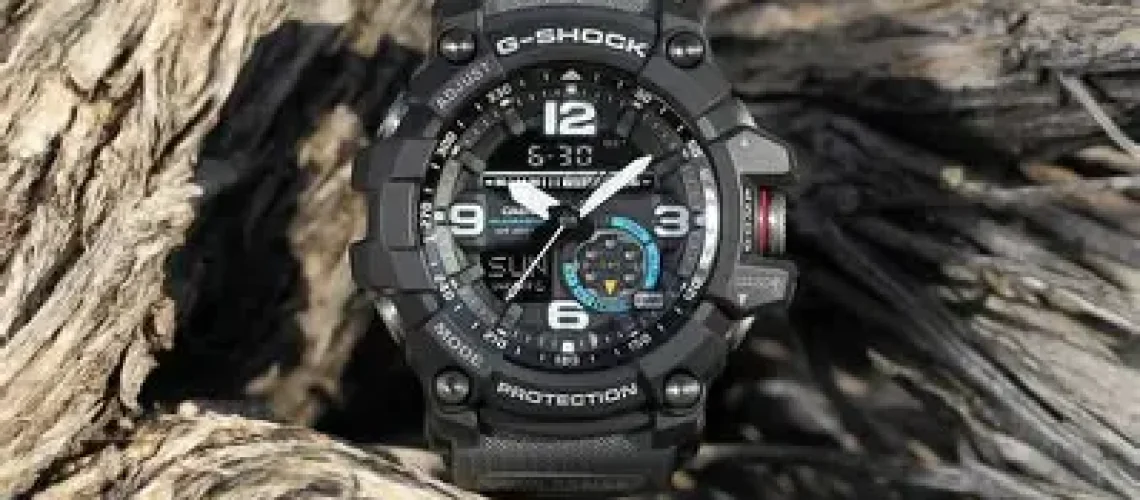
G-Shock is a line created by Casio in 1983. It was engineered around a core design objective: shock resistance. The original concept came from engineer Kikuo Ibe’s “Triple 10” goal — 10-meter drop resistance, 10-bar water resistance, and 10-year battery life.
That philosophy built something very different from Swiss mechanical prestige.
G-Shock was never about refinement.
It was about survival.
And that positioning matters.
Intelligence Signal #1: They Understand Utility vs Status
Most entry-level collectors chase status signaling.
G-Shock collectors chase utility signaling.
A mechanical watch, even from a major Swiss house, is inherently fragile compared to a resin-cased quartz module designed for impact resistance. A G-Shock can absorb punishment that would destroy a traditional movement.
Collectors who own G-Shocks understand something important:
Tool watches should function as tools.
That mindset translates to disciplined buying behavior. They evaluate:
Shock resistance
Module functionality
Solar charging capability
Atomic timekeeping (Multi-Band 6 in certain models)
Case architecture
They are not buying mythology. They are buying engineering.
Intelligence Signal #2: They Understand Production Cycles
Swiss luxury brands aim for continuity.
G-Shock thrives on controlled discontinuity.
Limited runs. Regional exclusives. Collaboration drops. Colorway variations. Anniversary releases.
This creates micro-cycles.
A collector who studies G-Shock references understands:
Which models were short production runs
Which collaborations were region-locked
Which modules are no longer manufactured
Which case shapes return cyclically
That is not casual collecting. That is pattern recognition.
Intelligence Signal #3: They Exploit Asymmetric Risk
Let’s talk capital.
If you buy a $12,000 mechanical watch, downside risk is meaningful. Liquidity is good, but capital is tied up.
If you buy a $150–$500 G-Shock:
Downside is limited
Liquidity is fast
Storage cost is negligible
Condition sensitivity is lower
Some rare or discontinued G-Shock models trade multiples above retail after production ends.
The risk-to-reward profile can be asymmetric.
A collector who builds a $5,000 diversified G-Shock collection across limited runs and collaborations may achieve percentage returns that rival mid-tier Swiss appreciation — with dramatically lower exposure.
That is intelligent capital allocation.
Intelligence Signal #4: They Ignore Hierarchy Pressure
The Swiss market operates on hierarchy:
Entry luxury
Mid luxury
High luxury
Independent haute horology
G-Shock collectors opt out of that hierarchy entirely.
They are not chasing perceived upward mobility. They are curating on their own terms.
That independence is intellectually honest.
They are not trying to “graduate” to something else. They are studying what they enjoy and mastering it.
That depth creates expertise.
Intelligence Signal #5: They Understand Cultural Capital
Here is what most luxury collectors overlook:
Cultural relevance compounds differently than heritage prestige.
G-Shock has cross-segment adoption:
Military personnel
Professional athletes
Streetwear communities
Hip-hop artists
Tactical professionals
Outdoor enthusiasts
That breadth creates long-term cultural durability.
Mechanical brands rely heavily on traditional luxury narratives. G-Shock integrates into functional culture and fashion culture simultaneously.
Collectors who recognize that are playing a long game.
Intelligence Signal #6: They Recognize the Durability Paradox
Mechanical watch collectors often baby their pieces.
Service intervals.
Moisture concerns.
Shock concerns.
Magnetization.
G-Shock collectors wear their watches aggressively.
The paradox is this:
The watch that can survive anything often builds stronger emotional attachment than the watch that must be protected.
Attachment drives retention.
Retention drives secondary-market scarcity over time.
Scarcity supports pricing.
This is not accidental.
Intelligence Signal #7: They Track Module Evolution
Swiss collectors track movement calibers.
G-Shock collectors track module evolution.
Solar vs battery.
Bluetooth connectivity.
Multi-Band radio control.
Carbon core guard structures.
Titanium variants.
The technology curve is measurable.
Collectors who understand module upgrades can identify inflection points — when a reference represents the “last of” a generation before technological change.
That creates collectible friction.
The Steel Question
When G-Shock released full-metal variants — including stainless steel case constructions — it blurred the line between digital and luxury.
The market reaction was instructive.
Traditional collectors dismissed them.
Streetwear collectors embraced them.
Secondary pricing spiked.
That is a classic adoption curve pattern.
Smart collectors study adoption curves.
Psychological Edge: No Ego Premium
G-Shock collectors are less exposed to ego pricing.
There is no $40,000 MSRP anchor.
No boutique games.
No artificial waitlists.
Transactions are clean.
Clean transactions create rational behavior.
Rational behavior produces better long-term decisions.
The Liquidity Advantage
Rolex liquidity is institutional.
G-Shock liquidity is grassroots.
You can move a desirable discontinued G-Shock quickly through niche communities. The buyer base is active, informed, and digitally connected.
Lower price points increase buyer pool size.
Larger buyer pools stabilize demand.
The Portfolio Parallel
At Tailored Timepieces, we view watches through allocation buckets:
Core (high liquidity, low volatility)
Growth (brand momentum, design shifts)
Speculative (discontinued, under-recognized, culturally rising)
G-Shock fits cleanly into growth and speculative buckets with limited downside exposure.
That structure is attractive for disciplined operators.
What Most Swiss Collectors Get Wrong
They assume price equals sophistication.
It does not.
Sophistication is measured by:
Research depth
Risk management
Exit strategy awareness
Cultural literacy
Long-term pattern recognition
Many G-Shock collectors operate with all five.
Who Should Pay Attention
If you are:
A Rolex collector feeling saturation
A portfolio-minded buyer seeking lower capital exposure
A cultural observer tracking streetwear convergence
A younger collector entering the market intelligently
You should study G-Shock, not dismiss it.
The Smart Move
The smartest collectors do not replace Rolex.
They rotate.
They allocate.
They diversify.
Owning a G-Shock alongside high-end mechanical watches is not regression.
It is strategic flexibility.
It allows you to:
Wear aggressively without stress
Participate in limited releases
Experiment with color and design
Engage with a broader collector ecosystem
That is not amateur behavior.
That is mature collecting.
Final Thought
The market is layered.
Some layers signal wealth.
Some layers signal taste.
Some layers signal knowledge.
G-Shock collectors often signal something quieter:
Discipline.
And in collecting — discipline compounds.
When Rolex starts to feel repetitive, the smartest move is not necessarily to move up.
Sometimes the smart move is to move laterally.
Study overlooked segments.
Understand production logic.
Track adoption curves.
Control downside.
That is how serious collectors operate.
And many G-Shock collectors are doing exactly that.