
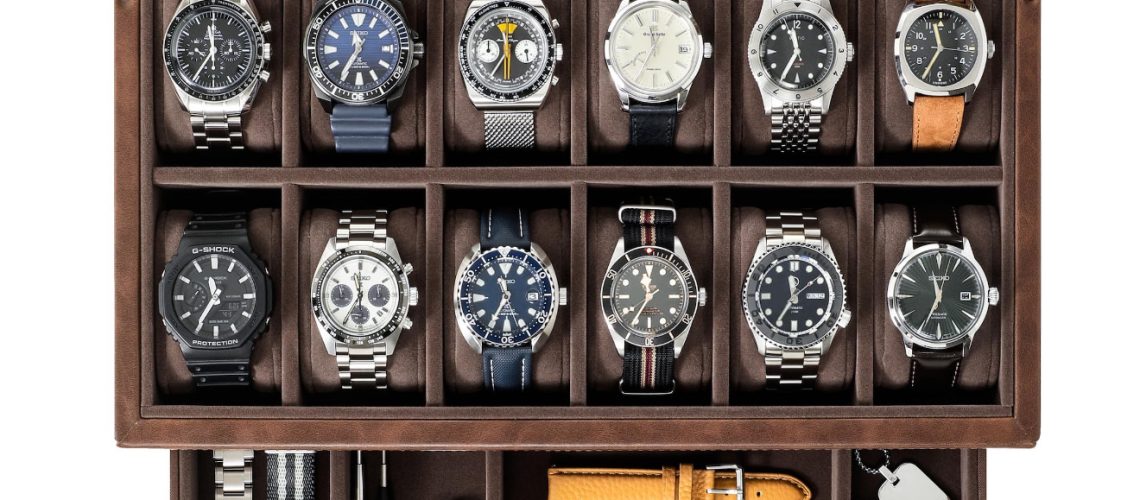

When people talk about watches, the focus is almost always on the watch itself: the movement, the dial, the case, the bracelet. The box the watch comes in is usually treated as an afterthought, something that lives in a closet or under a bed once the initial unboxing is over. That assumption is costly. Watch box size matters materially, financially, and psychologically. It affects resale value, storage efficiency, shipping risk, brand perception, and long-term ownership experience.
This is not about sentimentality or aesthetics alone. Watch box size has direct implications for collectors, dealers, and anyone who expects to preserve value over time.
What “Watch Box Size” Actually Refers To
A watch box is not just packaging. It is part of the product ecosystem.
Watch box size typically includes:
- The outer presentation box dimensions
- The inner watch cradle or pillow
- Additional compartments for papers, booklets, or accessories
- Structural materials used to protect the watch
Luxury brands often ship watches in multi-layered boxes: an outer cardboard shell, an inner hard box, and a fitted interior. Each layer adds bulk, weight, and storage implications.
Why Brands Use Oversized Watch Boxes
Oversized boxes are not accidental. They are intentional marketing tools.
Perceived Value and Psychological Weight
Large boxes create a sense of occasion. Heavier, larger packaging triggers subconscious associations with importance and value. This is the same principle used in luxury electronics, jewelry, and fragrance.
From a brand perspective:
- Bigger boxes feel more “luxury”
- The unboxing experience becomes theatrical
- The product feels more substantial before it is even worn
This works well at the point of sale. It is less effective over the long term.
Storage Reality: The Collector’s Problem
Watch box size becomes a problem the moment ownership begins.
Space Inefficiency
Luxury watch boxes are disproportionately large relative to the item they protect. A single watch box can take up as much space as:
- Multiple shoes
- A stack of books
- Several smaller watch rolls
Collectors with more than a few watches quickly encounter storage issues. Closets, drawers, and shelves fill up fast. This is not hypothetical. It is a common reason boxes get discarded.
Why Discarding the Box Is a Mistake
Removing the box solves a short-term space issue and creates a long-term financial one. Once separated from its original box, a watch is no longer “complete.” That distinction matters.
Box Size and Resale Value
Original box size directly impacts resale value and buyer confidence.
Complete Set Premium
In the secondary market, watches are typically categorized as:
- Watch only
- Watch with box
- Full set (box, papers, accessories)
A full set commands a premium. That premium exists regardless of whether the buyer ever uses the box.
Large, branded boxes are harder to replace than generic packaging. When they are missing, buyers assume:
- The watch changed hands frequently
- The watch was not carefully stored
- The seller may be less detail-oriented
These assumptions affect pricing.
Shipping Risk Without Original Boxes
Original boxes are designed to secure the watch during transport. Oversized boxes often include:
- Custom-molded interiors
- Shock-absorbing materials
- Stable positioning that prevents movement
Without them, sellers must improvise. Improvised packaging increases the risk of damage, insurance disputes, and returns.
Watch Box Size and Long-Term Ownership
Protection Over Time
Large boxes are not just display pieces. They protect watches from:
- Dust
- Light exposure
- Accidental impact
- Humidity fluctuations
Smaller aftermarket boxes or rolls may be convenient but often provide less structural protection. This matters for watches with delicate finishes, precious metals, or vintage components.
Organization and Documentation
Oversized boxes often include compartments for:
- Warranty cards
- Instruction manuals
- Hang tags
- Extra links or straps
When boxes are too small or absent, paperwork becomes separated from the watch. This separation reduces future resale clarity and increases the chance of loss.
The Secondary Market Perspective
Dealers and resellers care deeply about box size, even if end buyers claim not to.
Inventory Storage Costs
Large boxes require:
- More shelving
- Climate-controlled storage
- Higher real estate costs
Dealers who handle volume must balance box retention with operational efficiency. Despite this, boxes are rarely discarded because of their impact on value.
Buyer Expectations
Buyers expect luxury watches to arrive in their original packaging. When they do not, negotiations become harder and margins shrink.
Box size becomes a silent signal of legitimacy and care.
Vintage Watches and Box Scarcity
For vintage watches, original boxes are rare. When they appear, they matter even more.
Why Vintage Boxes Carry Weight
- They are often period-correct in design and branding
- They confirm originality and provenance
- They differentiate otherwise similar watches
Vintage boxes are frequently larger than modern minimalist packaging. Their survival over decades adds historical value.
A vintage watch with its original box can stand out significantly in a crowded market.
Sustainability and the Box Size Debate
There is growing criticism of oversized luxury packaging.
Environmental Cost
Large boxes require:
- More materials
- More energy to produce
- More shipping volume and fuel
Some brands have begun reducing packaging size or offering alternative storage options. However, this creates tension between sustainability goals and resale expectations.
The Trade-Off
Smaller boxes may be better for the environment but worse for long-term value retention if buyers perceive them as less “complete.” The market has not fully resolved this contradiction.
Practical Guidance for Buyers
If You Are Buying New
- Keep the box, regardless of size
- Store it flat, clean, and dry
- Keep all contents together
The inconvenience of storage is outweighed by future flexibility.
If You Are Buying Pre-Owned
- Ask about box dimensions and condition
- Confirm whether all inserts and accessories are included
- Factor missing boxes into price negotiations
Box absence is not a dealbreaker, but it should be reflected in value.
Practical Guidance for Collectors
Storage Strategies
- Use labeled shelving or bins for boxes
- Separate outer cardboard shells from inner boxes to save space
- Avoid stacking heavy boxes on top of one another
Proper storage preserves both the box and the watch’s future marketability.
Why Watch Box Size Is Not Trivial
Watch box size influences:
- Perceived value at purchase
- Physical protection during ownership
- Storage efficiency
- Resale price and buyer trust
- Shipping safety
- Historical completeness
It is not just packaging. It is part of the asset.
Ignoring box size is common. Regretting it is also common.
Final Assessment
Watch box size matters because watches are not disposable goods. They are long-lived objects that move through time, owners, and markets. The box is part of that journey. Whether oversized or compact, its presence, condition, and completeness shape how the watch is perceived and valued long after the initial unboxing.
Treat the box as part of the watch. The market already does.